

Something has changed in Southeast Asia. Five years ago, most foundries in Thailand, Vietnam, Indonesia, and Malaysia were running old gas-fired furnaces and patching them up. Today, they are investing in new equipment. Not because they want to. Because they have to.
I have spent 25 years working with aluminium melting furnaces in this region. In the last three years, I have seen more die casting furnace upgrades than in the previous decade combined. Here is why — and what it means for foundries that have not yet made the move.
The Four Forces Driving Upgrades
Four things are pushing Southeast Asian foundries to upgrade their die casting furnaces:
Energy costs are rising. Gas and electricity prices have increased 30–60% in some markets since 2020. Old furnaces waste energy. New furnaces save it.
Automotive demand is shifting. Electric vehicle production is growing in Thailand and Indonesia. EV parts require tighter temperature control and cleaner metal. Old furnaces cannot deliver that.
Emissions regulations are tightening. Governments in the region are introducing stricter environmental rules. Old furnaces produce more NOx, CO, and particulate matter.
Quality expectations are higher. Global customers — especially automotive OEMs — demand consistent quality. Inconsistent temperature means inconsistent castings. That means scrap.
I have seen all four forces at work. A die casting plant in Thailand upgraded two furnaces in 2023. Their energy cost per tonne dropped 22%. Their scrap rate fell from 6% to 2.5%. The investment paid back in 14 months.
Energy: The Numbers That Force Action
Energy is the single biggest reason for upgrades. In a typical die casting plant, melting accounts for 40–60% of total energy use.
Modern aluminium melting systems can achieve 550–650 kWh per tonne. Legacy furnaces often run at 1,000–1,200 kWh per tonne. That is a 45% difference.
| Metric | Legacy Furnace | Modern Furnace | Improvement |
|---|---|---|---|
| Energy consumption | 1,000–1,200 kWh/t | 550–650 kWh/t | ~45% |
| Metal oxidation loss | 3.0–5.0% | 0.8–1.5% | ~70% |
| Temperature stability | ±15–20°C | ±5°C | 3–4x better |
| Lining life | 1–3 years | 5–8 years | 2–3x longer |
On a 2-tonne-per-day furnace, the energy savings alone can exceed $40,000 per year. Add the metal savings, and the payback period is often under two years.
I worked with a foundry in Vietnam that upgraded from a legacy gas furnace to a modern twin-chamber design. Energy consumption dropped from 1,150 kWh/t to 620 kWh/t. They saved over $55,000 in the first year. The furnace paid for itself in 18 months.
EV Production Is Changing the Game
Thailand and Indonesia are becoming EV manufacturing hubs. Chinese, Japanese, and Korean automakers are investing billions in local production. That means demand for aluminium die castings — battery housings, motor casings, structural parts.
EV parts are not the same as traditional automotive parts. They are often larger, thinner-walled, and require tighter tolerances. Temperature control is critical. A furnace that swings ±15°C cannot produce consistent EV castings.
I visited a die casting plant in Rayong, Thailand, in 2024. They had just installed a new electric holding furnace for EV battery housing production. The temperature stability was ±3°C. Their scrap rate dropped from 8% to 1.5%. The OEM customer increased their order volume.
That is the new standard. If you cannot meet it, you lose the contract.
Emissions and Compliance
Southeast Asian governments are tightening environmental rules. Thailand has introduced stricter emission standards for industrial furnaces. Indonesia is enforcing emission limits in industrial zones. Vietnam is requiring cleaner combustion for new installations.
Old furnaces produce more NOx, CO, and particulates. They also waste gas, which means more CO₂ per tonne of metal melted.
New furnaces with low-NOx burners, better combustion control, and heat recovery can cut emissions by 30–50%. For foundries that export to Europe, this matters even more. The EU’s CBAM now covers aluminium products. The emissions from your melting furnace affect your export costs.
I have seen foundries delay compliance work. Then they pay premium prices for equipment and installation. Do not wait. If you need a fume extraction system or a low-NOx burner, order it now.
Quality: The Hidden Cost of Old Furnaces
Inconsistent temperature means inconsistent metal quality. Inconsistent metal quality means porosity, cold shuts, and scrap.
I worked with a die casting plant in Malaysia that had a 12% scrap rate. They blamed the die, the alloy, and the operators. The real problem was the furnace. Temperature varied from 690°C to 750°C across the bath. The metal near the burner was overheated. The metal near the door was too cold.
We installed a new holding furnace with better circulation and temperature control. The scrap rate dropped to 3%. The annual saving in scrap alone was over $80,000.
That is the hidden cost of an old furnace. You pay for it every day, in scrap, in rework, and in customer complaints.
What Upgrades Are Foundries Making?
The upgrades vary by foundry and by budget. But I see four common patterns:
1. Replacing legacy gas furnaces with modern gas or hybrid designs. These use recuperative burners, better insulation, and advanced controls. Energy savings of 20–30% are typical.
2. Adding electric holding furnaces. Gas for melting, electric for holding. This gives fast melt rates and precise temperature control. Common for automotive and EV parts.
3. Installing automated charging and dosing systems. Labour is becoming more expensive and harder to find in Southeast Asia. Automation reduces labour cost and improves consistency.
4. Upgrading to twin-chamber or tower furnaces for recycling. As scrap quality declines, foundries need furnaces that can handle contaminated material and recover more metal.
I helped a foundry in Indonesia upgrade from a single-chamber reverb to a twin-chamber design. Metal recovery improved from 82% to 91%. The annual value of recovered metal was over $180,000.
A Real Case from Thailand
In 2023, a die casting plant in Chonburi, Thailand, faced a decision. Their two gas-fired furnaces were 12 years old. Energy consumption was 1,100 kWh/t. Scrap rate was 7%. The main customer — a Japanese automotive OEM — was demanding better quality.
They evaluated three options:
Rebuild the existing furnaces. Cost: $45,000. Expected energy: 950 kWh/t.
Buy new gas furnaces from a European supplier. Cost: $180,000. Expected energy: 600 kWh/t.
Buy new gas furnaces from a Chinese supplier. Cost: $120,000. Expected energy: 620 kWh/t.
They visited reference sites for both new options. The European furnace was excellent but over budget. The Chinese furnace was in a similar plant, running well for two years. The supplier had a local service engineer and a spare parts warehouse in Bangkok.
They chose the Chinese furnaces. Result after one year:
Energy consumption: 640 kWh/t
Scrap rate: 2.8%
Annual savings: $95,000
Payback period: 15 months
That is the reality in Southeast Asia today. Chinese suppliers are winning contracts because they offer the right combination of price, performance, and local support.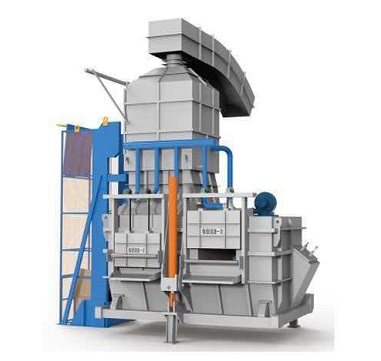
The Risks of Waiting
I have seen foundries delay upgrades because they are worried about the investment. But waiting has a cost.
Energy costs keep rising. Every year you wait, you pay more for the same production.
Quality problems persist. Scrap rates stay high. Customers complain.
Compliance deadlines approach. Then you pay premium prices for rushed installation.
Competitors upgrade first. They win the contracts you lose.
A foundry in Vietnam waited three years to upgrade. By the time they acted, their main customer had moved to a competitor. The upgrade cost was the same. The lost business was not.
How to Plan an Upgrade
If you are considering a furnace upgrade, here is what I recommend:
Measure your current performance. Energy consumption per tonne. Scrap rate. Temperature stability. You cannot improve what you do not measure.
Define your future requirements. What alloys will you melt? What volumes? What quality standard? Will you need EV capability?
Evaluate furnace types. Match the furnace to your process. Do not buy more furnace than you need.
Get quotes from multiple suppliers. Include European, Japanese, and Chinese options. Visit reference sites.
Calculate total cost of ownership. Purchase price, energy, maintenance, lining life, downtime. The cheapest furnace is rarely the best value.
Plan for installation. Can you install without stopping production? Do you need a temporary furnace? How long will commissioning take?
Train your operators. A new furnace needs new procedures. Training is not optional.
Budget for spare parts. Keep critical parts on the shelf. Do not wait for a shipment from overseas.
Final Thoughts
Southeast Asian foundries are upgrading because they have to. Energy costs, EV demand, emissions rules, and quality expectations are forcing the change. The ones who act early will win the contracts. The ones who wait will lose them.
In my 25 years, I have seen this pattern before. It happened in Europe in the 1990s. It happened in China in the 2000s. Now it is happening in Southeast Asia.
The technology is available. The suppliers are ready. The financing is affordable. The only question is whether you act.
If you are considering an upgrade, start measuring your current performance today. The data will tell you what to do.
Internal links: Aluminium Melting Furnace Buying Guide 2026, How Chinese Furnace Manufacturers Are Competing in Global Markets
About the Author: Hu Shenyue is a veteran aluminium melting furnace expert with 25 years of hands-on experience in China, Southeast Asia, India, the UK, and Europe. He writes practical, experience-based content on furnace selection, maintenance, and optimisation at SmeltPro.