


In early 2024, I received a call from a quality manager at an aerospace melting plant in Sichuan Province. His company produces aluminium alloy castings for commercial aircraft programmes. They had been supplying non-critical parts for five years. Now, a major aerospace OEM wanted them to supply flight-critical components. The condition was simple: they needed NADCAP accreditation for heat treatment.
The plant had failed its first NADCAP audit six months earlier. The auditors issued eight non-conformances. The quality manager told me: “We thought we were ready. We were not. We need help to understand what NADCAP actually requires.”
I spent two weeks on site. Six months later, the plant passed the NADCAP audit with zero major non-conformances. This is how we did it.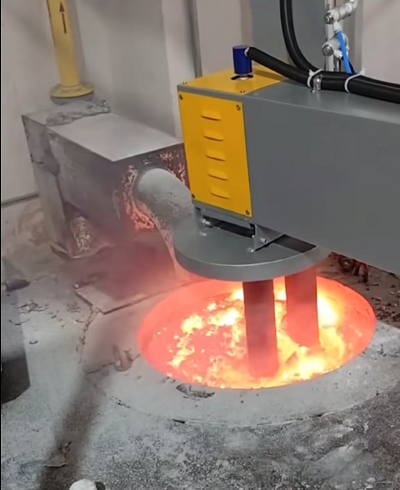
What Is NADCAP and Why Does It Matter
NADCAP stands for National Aerospace and Defense Contractors Accreditation Program. It is a global accreditation programme run by the Performance Review Institute (PRI), a non-profit subsidiary of SAE International. It accredits specific special processes used in aerospace manufacturing — heat treatment, non-destructive testing, chemical processing, welding, and others-.
For aerospace suppliers, NADCAP is not optional. Over 90% of major aerospace manufacturers — Boeing, Airbus, Rolls-Royce, GE — require NADCAP accreditation from their suppliers. Without it, you cannot bid on flight-critical work. With it, you join a supply chain that demands the highest levels of quality and traceability.
The audit is not a management system review. It is a technical audit. The auditors are industry experts who examine your equipment, your procedures, your records, and your people. They focus on specific process parameters, not on whether your quality manual is well written.
The Starting Point: Eight Non-Conformances
The Sichuan plant operates a gas-fired reverberatory furnace with a 3-tonne holding furnace. They melt 7050 and 6061 alloys for aerospace castings. They had AS9100 certification and a good reputation for commercial work. But NADCAP heat treatment accreditation was a different level.
The first audit failed on eight points. The most serious were:
| Non-Conformance | Details | Root Cause |
|---|---|---|
| Temperature Uniformity Survey (TUS) | Only one survey performed in 18 months | No formal TUS schedule |
| System Accuracy Test (SAT) | Thermocouple calibration records incomplete | No calibration log |
| Pyrometry documentation | No written pyrometry procedure | No awareness of AMS 2750 requirements |
| Process records | Only 5 consecutive batch records available | No systematic record retention |
| Personnel training | Operators had no documented NADCAP training | No training programme |
| Furnace classification | Furnace not classified per AMS 2750 | No understanding of furnace class |
| Instrument calibration | Calibration intervals not specified | No calibration schedule |
| Corrective action | Previous findings not fully closed | Weak root cause analysis |
The pattern was clear. The plant had good equipment and competent people. But they did not understand what NADCAP actually requires. They thought AS9100 was enough. It is not.
Understanding the Core Requirement: AMS 2750
The first thing I did was explain AMS 2750. This is the pyrometry specification that NADCAP uses as the foundation for heat treatment accreditation. If you do not understand AMS 2750, you cannot pass the audit.
AMS 2750 covers every aspect of temperature measurement in heat treatment:
Temperature sensors — thermocouple types, calibration, usage
Instrumentation — controllers, recorders, accuracy requirements
Thermal processing equipment — furnace classification, working zone
System Accuracy Tests (SAT) — verifying the entire measurement system
Temperature Uniformity Surveys (TUS) — verifying furnace uniformity
The key concept is furnace classification. A furnace is classified by its temperature uniformity — how closely it holds temperature across the working zone. A Class 1 furnace holds ±3°C. A Class 2 furnace holds ±6°C. A Class 3 furnace holds ±8°C.
The plant’s furnace was not classified. The first step was to classify it through a proper TUS.
Step 1: Perform a Temperature Uniformity Survey (TUS)
A TUS is a mandatory requirement for all thermal processing equipment used in aerospace under AMS 2750 and NADCAP-. The TUS verifies the furnace’s temperature uniformity across the qualified working zone.
We conducted a full TUS with a calibrated data logger and multiple thermocouples positioned throughout the working zone. The results:
| Location | Temperature Deviation |
|---|---|
| Front left | +4.2°C |
| Front right | -3.8°C |
| Centre | +1.1°C |
| Back left | -5.6°C |
| Back right | +4.8°C |
The maximum deviation was -5.6°C. That qualified the furnace as Class 2 (±6°C). The aerospace requirement was ±5.6°C. The furnace was just within tolerance. But we needed to improve it.
We made three changes:
Repositioned the thermocouples. The original thermocouple was in one corner. We added a second thermocouple near the door. The controller now averages the two readings.
Improved circulation. The furnace had poor air circulation. We adjusted the burner angle and added a baffle to direct hot gases more evenly.
Re-tuned the PID. The controller was set for a larger furnace. We re-tuned it for the actual volume and heat transfer characteristics.
After the changes, the maximum deviation dropped to -3.2°C. The furnace now qualified as Class 2 with margin.
I have written about how to fix a furnace that is not reaching setpoint temperature. The principles apply to TUS preparation.
Step 2: Implement System Accuracy Tests (SAT)
A SAT verifies the accuracy of the entire measurement system — thermocouple, extension wire, controller, and recorder. The aerospace requirement is that SAT error must be within ±1.1°C.
We implemented a formal SAT procedure:
A calibrated reference thermocouple was placed adjacent to the furnace control thermocouple.
Both readings were recorded at three temperatures: 500°C, 600°C, and 700°C.
The difference between the control reading and the reference reading was calculated.
The first SAT revealed a problem. The control thermocouple was reading 2.8°C high. That was outside the ±1.1°C tolerance. We replaced the thermocouple and re-ran the test. The error dropped to 0.6°C.
We established a SAT schedule:
| Activity | Frequency |
|---|---|
| SAT | Quarterly |
| Thermocouple calibration | Every 6 months |
| Controller calibration | Annually |
| TUS | Quarterly (for Class 2, Type B) |
The TUS frequency was determined by the furnace class and instrumentation type. For a Class 2 furnace with Type B instrumentation, the initial TUS interval is monthly until four consecutive successful surveys, then quarterly.
Step 3: Establish Process Records and Traceability
NADCAP requires documented evidence of process control. The aerospace standard requires at least 20 consecutive batch records of process data. The plant had only 5.
We implemented a process recording system:
| Data Point | Recording Method | Retention Period |
|---|---|---|
| Furnace temperature | Continuous chart recorder | 10 years |
| SAT results | Calibration log | 10 years |
| TUS results | Survey report | 10 years |
| Charge material | Barcode scanning | 10 years |
| Melt chemistry | Spectrometer report | 10 years |
| Casting parameters | PLC data logger | 10 years |
Every melt was assigned a unique melt number. The melt number linked to all process data. The data became part of the traceability record that NADCAP auditors would review.
Step 4: Personnel Training and Qualification
NADCAP requires that heat treatment personnel be trained and qualified. The aerospace standard requires operators to complete NADCAP-recognised training.
We developed a training programme:
Pyrometry fundamentals — thermocouple types, calibration, accuracy
AMS 2750 requirements — furnace classification, TUS, SAT
Process control — temperature recording, alarm response
Documentation — how to complete records accurately
We also sent two senior engineers to a PRI-approved pyrometry training course. They became the plant’s internal pyrometry experts.
The training was documented. Each operator signed a training record. The records were filed with the NADCAP audit documentation.
Step 5: Write the Pyrometry Procedure
NADCAP requires a written pyrometry procedure that covers all aspects of AMS 2750 compliance. The plant had none.
We wrote a 15-page procedure covering:
Furnace classification and working zone definition
Thermocouple types and calibration requirements
Instrumentation accuracy requirements
SAT procedure and frequency
TUS procedure and frequency
Record retention requirements
Corrective action for out-of-tolerance conditions
The procedure was written in plain language. It was not a 100-page manual that nobody would read. It was a working document that operators could follow.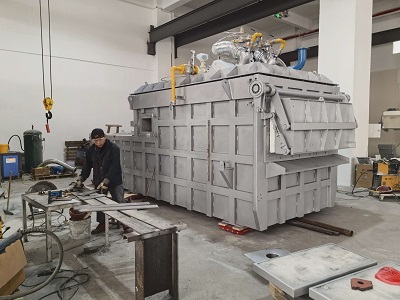
Step 6: Prepare for the Audit
Six months after the first failed audit, we conducted a pre-audit gap analysis. We used the NADCAP audit checklist (AC7102 series) as our guide. We checked every item:
Was the pyrometry procedure written?
Were TUS and SAT records complete?
Were thermocouple calibrations current?
Were operators trained and documented?
Were process records retained for at least 20 batches?
Was the furnace classified?
We found three minor gaps. We closed them within two weeks.
The Audit Results
The NADCAP audit was conducted over three days. The auditor reviewed documentation, observed the furnace in operation, and interviewed operators.
The result: zero major non-conformances. Three minor observations.
| Audit Area | Result |
|---|---|
| Pyrometry procedure | Compliant |
| TUS records | Compliant |
| SAT records | Compliant |
| Thermocouple calibration | Compliant |
| Process records | Compliant |
| Personnel training | Compliant |
| Furnace classification | Compliant |
| Corrective action | Compliant |
The plant received NADCAP accreditation for heat treatment. They can now bid on flight-critical aerospace work.
What Made the Difference
Three things drove the improvement:
1. Understanding AMS 2750. The plant had good equipment. They did not understand the standard. Once they understood furnace classification, TUS, and SAT, the path forward was clear.
2. Systematic record-keeping. NADCAP is not just about doing the right thing. It is about proving you did the right thing. Records are the proof.
3. Training. The auditors interview operators. If operators cannot explain what they do and why, the audit fails. Training made the difference.
What You Can Apply
If you are preparing for NADCAP heat treatment accreditation, ask yourself these questions:
Is your furnace classified per AMS 2750? If not, perform a TUS.
Are your SAT records current and complete? If not, implement a SAT schedule.
Do you have a written pyrometry procedure? If not, write one.
Are your process records retained for at least 20 consecutive batches? If not, start recording.
Are your operators trained and documented? If not, train them.
Do you have a corrective action system that closes findings? If not, build one.
These are not theoretical. They are the minimum requirements for NADCAP accreditation. I have seen foundries in China, Southeast Asia, and India fail because they ignored one of these.
When to Call an Expert
You can prepare for NADCAP yourself. But the standard is complex and the audit is strict. The Sichuan plant had competent engineers. They had AS9100 certification. But they did not understand AMS 2750.
My fee for the two-week audit and preparation support was $16,000. The value of the aerospace contract was over $3 million per year. That is a good return.
If you are preparing for NADCAP, bring in a specialist early. The cost of a consultant is small compared to the cost of a failed audit.
Final Thoughts
NADCAP certification is not about buying a new furnace. It is about controlling temperature, documenting everything, and training your people. Each one must be right. If one fails, the others cannot compensate.
In my 25 years, I have seen China move from importing almost everything to producing over half the aluminium in its own commercial aircraft. That is not a small achievement. But the gap between what China can do and what it needs to do remains the defining challenge of the next decade.
For foundries entering aerospace work, the message is simple: this is a different game. It demands different furnaces, different processes, and different standards. The ones who understand this will win. The ones who do not will be left behind.
Internal links: How to Achieve Aerospace-Grade Aluminium Melt Cleanliness, The State of China's Aerospace Aluminium Melting Industry – Expert Analysis, Case Study – How a Chinese Expert Achieved Aerospace Melt Purity for a US Supplier
About the Author: Hu Shenyue is a veteran aluminium melting furnace expert with 25 years of hands-on experience in China, Southeast Asia, India, the UK, and Europe. He writes practical, experience-based content on furnace selection, maintenance, and optimisation at SmeltPro.