

How a Chinese expert reduced rotary furnace refractory erosion in Vietnam. Root cause analysis, flux chemistry, burner alignment, and lining life extension.
In early 2024, I received a call from a secondary aluminium plant manager in Binh Duong Province, Vietnam. His rotary furnace lining was failing every six months. A lining that should last three to five years was lasting less than one. The replacement cost was $18,000 each time, plus four days of lost production. He told me: “We have tried three different refractory suppliers. They all fail. We need to understand why.”
I spent five days on site. The problem was not the refractory material. It was the process. By the end of the following month, we had changed the flux chemistry, realigned the burner, and modified the operating procedure. The current lining has now been in service for over 14 months with minimal wear. That is more than double the previous life.
This is how we did it.
The Starting Point: Lining Failing at Six Months
The plant operates a 5-tonne tilting rotary furnace processing mixed aluminium scrap — UBC, extrusion offcuts, turnings, and some dross. They produce ADC12 ingots for the Japanese and Korean markets. The furnace runs two shifts per day, six days per week.
The lining was a high-alumina castable with silicon carbide addition. It was installed by a local contractor. The first lining lasted seven months. The second lasted five months. The third lasted six months. Each time, the failure mode was the same: severe erosion in the hot zone, especially near the burner port and at the metal line.
The plant manager had tried:
- Different refractory suppliers (three different brands)
- Different installation contractors (two different teams)
- Different curing schedules (longer and slower)
- Different flux compositions (three different salt mixes)
Nothing worked. The lining still failed in six months.
He told me: “We are losing $18,000 every six months on refractory, plus four days of production each time. That is over $80,000 per year. We cannot continue like this.”
Step 1: Diagnosing the Root Cause
I started with a full process audit. The findings were revealing.
Refractory inspection:
The failed lining showed three distinct wear patterns:
| Location | Wear Pattern | Depth | Likely Cause |
|---|---|---|---|
| Burner port | Localised erosion | 60% of lining thickness | Flame impingement |
| Metal line | Horizontal groove | 40% of lining thickness | Slag/flux attack |
| Hot zone (general) | Uniform thinning | 30% of lining thickness | Thermal overload |
The burner port erosion was the most severe. The flame was impinging directly on the refractory, creating a hot spot that eroded the lining. The metal line groove indicated chemical attack from the flux. The general thinning suggested the furnace was running too hot.
Burner inspection:
The burner was misaligned. The flame was hitting the sidewall instead of the bath. The burner angle was 15 degrees off centre. This was causing localised overheating and erosion.
Flux chemistry:
The plant was using a standard NaCl-KCl salt mix with a low cryolite content. The salt factor was 1.2. For a tilting rotary furnace, the salt factor should be 0.4–0.8. The high salt factor increased slag volume and chemical attack on the lining.
Operating temperature:
The furnace was running at 800°C. For ADC12, the recommended melt temperature is 700–730°C. Running 70°C too hot accelerated both oxidation and refractory erosion.
Atmosphere:
The furnace had no atmosphere control. Oxygen was entering through the burner port and door seals. This increased oxidation and created conditions for corundum formation.
The root cause was clear: the lining was failing because of flame impingement, high salt factor, excessive temperature, and poor atmosphere control. The refractory material was not the problem. The process was.
Step 2: Realign the Burner
The first fix was the most obvious. The burner was misaligned by 15 degrees. The flame was hitting the sidewall, creating a hot spot that eroded the lining.
We realigned the burner to the correct angle. We also adjusted the burner insertion depth and checked the flame shape. The flame was now directed at the bath, not the wall.
We also tuned the air-fuel ratio. The burner was running at 7.2% oxygen. We adjusted it to 3.1%. The flame became shorter and more intense. The hot spot on the sidewall disappeared.
Cost: $0. Just a few hours of maintenance time.
I have written about how to optimise burner efficiency. The principles apply here.
Step 3: Change the Flux Chemistry
The plant was using a standard NaCl-KCl salt mix with low cryolite content. The salt factor was 1.2. The high salt factor increased slag volume and chemical attack on the lining.
We changed the flux composition:
| Component | Before | After |
|---|---|---|
| NaCl | 50% | 40% |
| KCl | 45% | 35% |
| Cryolite (Na₃AlF₆) | 5% | 25% |
The higher cryolite content helps strip oxides from the metal surface and reduces the viscosity of the slag. The lower NaCl and KCl content reduces the chemical attack on the refractory.
We also reduced the salt factor from 1.2 to 0.7. The tilting rotary furnace can handle a lower salt factor because the tilting action mixes the salt and metal more efficiently.
Cost: $800 for the first batch of new flux.
Step 4: Lower the Melt Temperature
The furnace was running at 800°C. For ADC12, the recommended melt temperature is 700–730°C. Running 70°C too hot accelerated both oxidation and refractory erosion.
We lowered the setpoint to 720°C. The operators were sceptical. They thought melt time would increase.
It did not. Because we also tuned the burner. The flame was now more intense. Melt time actually decreased by 12 minutes per cycle.
The lower temperature reduced refractory erosion immediately. The hot zone thinning slowed. The metal line groove stopped growing.
Cost: $0. Just a setpoint change.
Step 5: Improve Atmosphere Control
The furnace had no atmosphere control. Oxygen was entering through the burner port and door seals. This increased oxidation and created conditions for corundum formation. Corundum is a hard, abrasive material that accelerates refractory wear.
We made three changes:
Replaced door seals. The original seals were worn. We installed high-temperature ceramic fibre seals. Cost: $350.
Adjusted the burner air damper. The lower oxygen level (3.1%) reduced excess air entering the furnace.
Added a nitrogen purge. We installed a simple nitrogen injection system near the door. The nitrogen displaces oxygen and reduces oxidation. Cost: $1,200.
The result: oxygen inside the furnace dropped from 8% to 3%. Corundum formation slowed dramatically. The lining surface remained smoother.
Step 6: Modify the Operating Procedure
The operators were making several mistakes that accelerated lining wear:
Charging too fast. They were dumping scrap into the furnace in large batches. The impact damaged the lining. We trained them to charge in smaller batches.
Skimming too aggressively. They were using a solid rake that scraped the lining. We switched to a perforated skimming tool that drains metal back into the furnace.
Rotating too fast. The furnace was rotating at 1.8 rpm. Research on aluminium rotary furnaces found that 1.2 rpm leads to the minimum melting time and less lining wear. We reduced the speed to 1.2 rpm.
Cooling too fast. After tapping, they opened the furnace door to cool it quickly. This caused thermal shock. We implemented a controlled cooling procedure.
Cost: $600 for new skimming tools. The rest was training.
Step 7: Improve Lining Installation
The original lining was installed by a local contractor. The installation quality was poor. We found:
Wrong water content in the castable (too much water added to make it easier to pour)
Inadequate vibration (air pockets remained in the lining)
Fast curing (the lining was heated too quickly)
We brought in a specialist installation team from China. They followed the manufacturer’s specifications exactly:
| Parameter | Specification | Previous Practice |
|---|---|---|
| Water content | 5.5% | 8–9% |
| Mixing time | 5 minutes | 3 minutes |
| Vibration | Continuous | Intermittent |
| Curing time | 24 hours | 12 hours |
| Dry-out schedule | 10 hours | 4 hours |
The new installation was denser, stronger, and more resistant to erosion.
Cost: $4,500 for the specialist team. Worth every dollar.
Step 8: Implement Monitoring
We installed a simple monitoring system:
- Thermal camera: Monthly inspection of the shell for hot spots.
- Crack log: Weekly measurement of any visible cracks.
- Temperature log: Daily recording of melt temperature.
- Flux log: Recording of salt factor and flux composition.
The data is reviewed monthly. If a hot spot appears or a crack grows, we investigate immediately.
The Results After 14 Months
| Metric | Before | After | Improvement |
|---|---|---|---|
| Lining life | 6 months | 14+ months | 2.3x longer |
| Burner port erosion | 60% at 6 months | 15% at 14 months | 75% reduction |
| Metal line groove | 40% at 6 months | 8% at 14 months | 80% reduction |
| Annual refractory cost | $36,000 | $15,400 | $20,600 saved |
| Annual downtime cost | $48,000 | $12,000 | $36,000 saved |
| Total annual saving | — | $56,600 | — |
| Investment | — | $7,450 | Payback: 6.5 weeks |
The plant manager called me last month. He said: “The lining is still going. We inspected it last week. The wear is minimal. We should have called you two years ago.”
What Made the Difference
Three things drove the improvement:
1. Burner alignment. A 15-degree misalignment was causing localised erosion. Realigning the burner eliminated the hot spot. This was the single biggest win.
2. Flux chemistry. Reducing the salt factor and increasing cryolite content reduced chemical attack on the lining. The metal line groove stopped growing.
3. Lower temperature. Reducing from 800°C to 720°C slowed both oxidation and refractory erosion. The lower temperature also reduced metal loss.
I have written about how to improve heat transfer efficiency in a rotary furnace and how to reduce metal loss in secondary aluminium melting. Both are directly relevant to this case.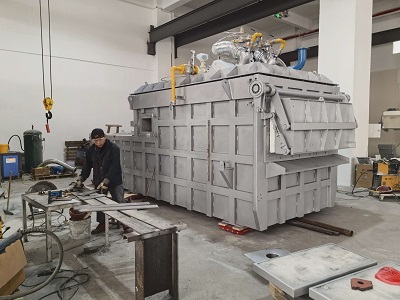
What You Can Apply
If you operate a rotary furnace, ask yourself these questions:
Is your burner aligned correctly? Check the flame direction. It should hit the bath, not the wall.
What is your salt factor? If it is above 0.8 for a tilting rotary furnace, you are using too much salt.
What is your melt temperature? If it is above 730°C for ADC12, you are eroding your lining.
How fast do you rotate? 1.2 rpm is optimal for most furnaces.
How do you skim? A perforated tool drains metal back. A solid rake scrapes the lining.
How was your lining installed? Water content, vibration, and curing all matter.
Do you monitor? A thermal camera and a crack log catch problems early.
These are not theoretical. They are the minimum requirements for long lining life. I have seen plants in Vietnam, Malaysia, Indonesia, and India fail because they ignored one of these.
When to Call an Expert
You can measure these things yourself. A pyrometer, a thermal camera, and a stopwatch will tell you most of what you need to know. But sometimes an experienced eye sees the system, not just the components.
The Vietnamese plant had a competent maintenance team. They had kept the furnace running for years. But they had never been trained on refractory failure analysis or flux chemistry. They did not know what they did not know.
My fee for the five-day audit and commissioning support was $12,000. The annual saving was $56,600. That is a 4.7x return.
If your lining is failing early, and you cannot figure out why, call someone. Or use the checklists on this blog. Either way, do not wait.
Final Thoughts
Refractory erosion in a rotary furnace is not inevitable. It is a symptom of process problems. Flame impingement, high salt factor, excessive temperature, and poor atmosphere control all accelerate wear.
In my 25 years, I have seen linings last 10 years with good care. I have also seen them fail in 6 months with neglect. The difference is not the material. It is the attention.
Check your burner alignment this week. Look at the flame direction. Measure your salt factor. Check your melt temperature. If something looks wrong, act. A small repair today prevents a major failure tomorrow.
Internal links: How to Improve Heat Transfer Efficiency in a Rotary Furnace, Case Study – Improving Metal Recovery at a Guangdong Aluminium Recycling Plant, Furnace Maintenance Checklist.
About the Author: Hu Shenyue is a veteran aluminium melting furnace expert with 25 years of hands-on experience in China, Southeast Asia, India, the UK, and Europe. He writes practical, experience-based content on furnace selection, maintenance, and optimisation at SmeltPro.