


In early 2024, I received an email from a procurement manager at a US aerospace supplier. His company produces precision aluminium components for commercial aircraft. They had been sourcing castings from a Chinese foundry for three years. The quality was acceptable for non-critical parts. But when they tried to qualify the foundry for a flight-critical component, the material failed the aerospace cleanliness specification.
The specification was strict: hydrogen below 0.06 ml/100g Al, inclusions below 1,000 particles/kg Al (≥40 μm), and full traceability from raw material to finished casting. The Chinese foundry could not meet it. The US supplier was ready to move the work to a European foundry — at three times the cost.
The Chinese foundry asked me to help. I spent two weeks on site. Six months later, the foundry passed the aerospace qualification audit. The US supplier cancelled the European transfer and increased their order volume by 40%.
This is how we did it.
The Starting Point: A Foundry That Could Not Meet Aerospace Spec
The Chinese foundry is located in Jiangsu Province. They melt 5 tonnes per day of aerospace-grade 7050 and 6061 alloys. They have a gas-fired reverberatory furnace with a 2-tonne holding furnace. They had ISO 9001 certification and a good reputation for commercial castings. But aerospace was a different game.
The qualification audit had failed on three points:
| Parameter | Aerospace Spec | Foundry Result | Gap |
|---|---|---|---|
| Hydrogen content | ≤0.06 ml/100g | 0.18 ml/100g | 3x too high |
| Inclusion count (≥40 μm) | ≤1,000 particles/kg | 3,200 particles/kg | 3.2x too high |
| Traceability | Full genealogy | Partial records | Incomplete |
The foundry manager told me: “We have tried degassing longer. We have tried different fluxes. We have tried changing the refractory. Nothing works. We need to understand the root cause.”
I told him: “Your furnace is not designed for aerospace. Your process is not controlled for aerospace. And your people have not been trained for aerospace. We need to fix all three.”
Step 1: Diagnosing the Root Cause
I started with a full process audit. The findings were revealing.
Hydrogen source: The foundry was using a manual degassing lance. The operator inserted the lance for 3–4 minutes, then moved to the next ladle. There was no measurement. No control. No consistency. Hydrogen was never below 0.15 ml/100g.
Inclusion source: The melt was transferred from the melting furnace to the holding furnace in an open ladle. The transfer distance was 12 metres. The metal was exposed to air for 45 seconds. Oxide inclusions formed during transfer. There was no filtration.
Atmosphere control: The holding furnace had no atmosphere control. The melt surface was exposed to air. Oxygen and moisture were absorbed continuously.
Temperature control: The holding furnace temperature swung ±15°C. For aerospace alloys, ±3°C is required. The thermocouple was in one corner. The metal near the door was 20°C cooler.
Traceability: The foundry had no melt genealogy system. Charge materials were recorded by weight, but not by source. Degassing parameters were not logged. There was no link between a finished casting and its melt history.
The root cause was clear: the foundry was trying to produce aerospace-grade material on a commercial-grade process. You cannot make aerospace parts on a commercial furnace. You need a system designed for aerospace.
Step 2: Upgrade the Degassing System
The first priority was hydrogen control. The target was below 0.06 ml/100g. The current manual lance degassing was achieving 0.18 ml/100g. That is a three-fold gap.
We installed a rotary degasser with argon. The parameters:
| Parameter | Setting |
|---|---|
| Rotor speed | 650 rpm |
| Argon flow rate | 22 L/min |
| Degassing time | 10 minutes per 500 kg batch |
| Gas purity | 99.999% argon |
We also installed a portable hydrogen analyser. The operator measures hydrogen before every pour. If the reading is above 0.06 ml/100g, the melt goes back for additional degassing. If it is below, the melt is released to casting.
The result: hydrogen dropped to 0.05 ml/100g within two weeks. The key was not just the equipment. It was the measurement. You cannot control what you do not measure.
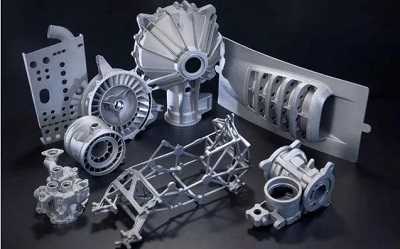
Aerospace
I have written about how to achieve aerospace-grade aluminium melt cleanliness. The principles apply here.
Step 3: Install Inline Filtration
Hydrogen was only half the problem. Inclusions were the other half. The aerospace spec required inclusions below 1,000 particles/kg (≥40 μm). The foundry was at 3,200 particles/kg.
We installed a two-stage ceramic foam filtration system between the holding furnace and the casting station:
| Stage | Filter Size | Purpose |
|---|---|---|
| Coarse | 30 ppi | Remove large inclusions >100 μm |
| Fine | 60 ppi | Remove smaller inclusions 40–100 μm |
The filters were preheated before use to prevent thermal shock. The metal flow rate was controlled to maintain laminar flow through the filters. Turbulence would re-entrain inclusions.
The result: inclusion count dropped to 620 particles/kg. The aerospace spec was met.
Step 4: Control the Furnace Atmosphere
The holding furnace was open to air. Oxygen and moisture were being absorbed continuously. For aerospace work, the atmosphere must be controlled.
We sealed the furnace with a high-temperature gasket and installed a nitrogen blanketing system. The oxygen content inside the furnace was maintained below 0.5%. The moisture content was maintained below 50 ppm.
We also installed a continuous atmosphere monitor. If oxygen or moisture rose above the setpoint, an alarm sounded. The operator could adjust the nitrogen flow before quality was affected.
The result: hydrogen pickup during holding dropped to near zero. Inclusion formation from oxidation slowed dramatically.
Step 5: Improve Temperature Control
The holding furnace temperature swung ±15°C. The aerospace spec required ±3°C. We upgraded the control system:
Added a second thermocouple near the door
Replaced the on-off controller with a PID controller
Re-tuned the PID parameters for the furnace volume and heat transfer characteristics
The result: temperature stability improved to ±2.5°C. The melt was uniform. The castings were consistent.
Step 6: Implement Full Traceability
Aerospace requires full traceability. Every casting must be linked to its melt history. The foundry had no such system.
We implemented a simple but effective traceability system:
| Data Point | Recording Method |
|---|---|
| Charge material source | Barcode scanning at receiving |
| Charge weight | Load cell on charging system |
| Melting temperature | PLC data logger |
| Degassing parameters | PLC data logger |
| Hydrogen measurement | Manual entry with time stamp |
| Filtration parameters | PLC data logger |
| Casting temperature | PLC data logger |
| Casting time | PLC data logger |
All data was stored in a central database. Each casting was marked with a melt number. The melt number linked to all process data. This data became part of the PPAP documentation that the US supplier’s auditors reviewed.
Step 7: Train the Team
The best equipment in the world fails without trained people. The foundry had competent operators. But they had never been trained on aerospace requirements.
We spent three days training:
- Why hydrogen matters and how to measure it
- How to operate the rotary degasser
- How to handle ceramic foam filters
- How to maintain the nitrogen blanket
- How to record data accurately
- What aerospace auditors look for
We also wrote new standard operating procedures. One page per critical process. No 50-page manuals that nobody reads.
The Results After Six Months
| Metric | Before | After | Aerospace Spec |
|---|---|---|---|
| Hydrogen content | 0.18 ml/100g | 0.05 ml/100g | ≤0.06 |
| Inclusion count (≥40 μm) | 3,200 particles/kg | 620 particles/kg | ≤1,000 |
| Temperature stability | ±15°C | ±2.5°C | ±3°C |
| Traceability | Partial | Full | Full |
| Aerospace audit | Failed | Passed | — |
The US supplier cancelled the European transfer. They increased their order volume by 40%. The foundry now produces flight-critical components for commercial aircraft.
What Made the Difference
Three things drove the improvement:
1. Hydrogen control. Rotary degassing with measurement before every pour reduced hydrogen from 0.18 to 0.05 ml/100g. This was the single biggest win.
2. Inclusion removal. Two-stage ceramic foam filtration reduced inclusions from 3,200 to 620 particles/kg.
3. Process control. Atmosphere control, temperature control, and traceability turned a commercial foundry into an aerospace foundry.
What You Can Apply
If you are trying to enter aerospace work, ask yourself these questions:
Can you measure hydrogen before every pour? If not, you cannot control it.
Do you have filtration? If not, inclusions will exceed aerospace limits.
Is your furnace atmosphere controlled? If not, oxidation and hydrogen pickup will occur.
Is your temperature stability within ±3°C? If not, you will have inconsistent quality.
Do you have full traceability? If not, you will fail the audit.
These are not theoretical. They are the minimum requirements for aerospace work. I have seen foundries in China, Southeast Asia, and India fail because they ignored one of these.
When to Call an Expert
You can measure these things yourself. But aerospace qualification is not a DIY project. It requires expertise in metallurgy, furnace design, and quality systems.
The Jiangsu foundry had a competent team. They had kept the furnaces running for years. But they had never been trained on aerospace requirements. They did not know what they did not know.
My fee for the two-week audit and commissioning support was $18,000. The value of the aerospace contract was over $2 million per year. That is a good return.
If you are trying to enter aerospace work, bring in a specialist early. The cost of a consultant is small compared to the cost of failed qualification.
Final Thoughts
Achieving aerospace melt purity is not about buying a new furnace. It is about controlling hydrogen, inclusions, atmosphere, temperature, and traceability. Each one must be right. If one fails, the others cannot compensate.
In my 25 years, I have seen China move from importing almost everything to producing over half the aluminium in its own commercial aircraft. That is not a small achievement. But the gap between what China can do and what it needs to do remains the defining challenge of the next decade.
For foundries entering aerospace work, the message is simple: this is a different game. It demands different furnaces, different processes, and different standards. The ones who understand this will win. The ones who do not will be left behind.
Internal links: How to Achieve Aerospace-Grade Aluminium Melt Cleanliness, The State of China’s Aerospace Aluminium Melting Industry – Expert Analysis, How to Reduce Gas Porosity in Die Casting Aluminium Melts, How to Evaluate the Reliability of Chinese Aluminium Furnace Manufacturers, Furnace Maintenance Checklist.
About the Author: Hu Shenyue is a veteran aluminium melting furnace expert with 25 years of hands-on experience in China, Southeast Asia, India, the UK, and Europe. He writes practical, experience-based content on furnace selection, maintenance, and optimisation at SmeltPro.