


How to diagnose and repair refractory cracking in aluminum melting furnaces. Causes, inspection, repair methods, and prevention. 25 years of foundry experience。
Note: I use British spelling “aluminium” throughout, but “aluminum” appears where North American search terms are relevant. The techniques are the same on both sides of the Atlantic.
Refractory cracking in an aluminium melting furnace is not a cosmetic problem. It is a warning. A crack lets heat escape, exposes the shell to high temperature, and allows molten metal to penetrate. If you ignore it, you will eventually lose the lining — or worse, the furnace.
Diagnosing and repairing refractory cracking comes down to four steps: find the crack, identify the cause, choose the right repair method, and prevent it from returning. I have done this in foundries across China, Southeast Asia, India, the UK, Europe, and North America. The principles do not change.
First, Understand What You Are Looking At
Not all cracks are equal. Some are harmless. Some mean the lining is finished.
Hairline cracks less than 1 mm wide are often normal. They close when the furnace heats up.
Cracks wider than 3 mm are a problem. They will grow.
Cracks that run through the lining — from hot face to shell — are serious. Heat is reaching the steel.
Cracks with molten metal staining mean aluminium has already penetrated. The lining is compromised.
Cracks that appear only when cold may be thermal expansion joints. Check if they close at operating temperature.
I use a simple rule: if you can fit a coin into the crack, it needs attention. If you can fit a finger, it needs replacement.
Step 1: Diagnose the Crack
Before you repair, you need to know why it cracked. Repairing without diagnosis is a waste of money.
Visual inspection is the first tool. Look at the crack pattern.
Vertical cracks in the sidewall often come from thermal shock or rapid heating.
Horizontal cracks near the metal line usually mean metal penetration or chemical attack.
Map cracking (a network of small cracks) suggests thermal cycling or poor installation.
Cracks around the burner port point to flame impingement or high local temperature.
Cracks in the roof often come from mechanical stress or overloading.
Thermal imaging helps. A thermal camera shows hot spots on the shell. If the shell is hotter near a crack, heat is escaping. That crack is active.
Measure the crack. Use a crack gauge or a simple feeler gauge. Record width, depth, and direction. Take photos. Compare next month. If it is growing, act now.
Check the operating history. Ask the operators:
Has the furnace been heated too fast?
Was the lining dried properly after installation?
Has the furnace been running above its rated temperature?
Was there a power failure or sudden shutdown?
In my experience, 70% of refractory cracking comes from three causes: rapid heating, thermal shock, and metal penetration. The other 30% comes from poor installation, wrong material, or mechanical damage.
Step 2: Identify the Root Cause
Here are the most common causes I have seen.
Thermal shock. This is the number one killer. A furnace that is heated too quickly expands faster than the refractory can handle. The lining cracks. I have seen a 5-tonne reverberatory furnace crack from top to bottom because the operator went from cold to 700°C in two hours. The recommended schedule was eight hours.
Metal penetration. Molten aluminium is aggressive. It finds its way into cracks, reacts with the refractory, and forms corundum. Corundum grows, widens the crack, and eventually pushes the lining apart. This is common in furnaces that run at high temperature or hold metal for long periods.
Chemical attack. Fluxes, slag, and alloying elements attack the refractory. A lining that is not designed for your flux will fail early. I have seen a foundry in India use a chloride-based flux on a lining that was not chloride-resistant. The lining cracked within four months.
Mechanical damage. Charging scrap too roughly, hitting the lining with a rake, or dropping ingots can crack the refractory. Operators often do not realise how much damage a small impact causes.
Installation errors. If the refractory is installed with the wrong water content, wrong mixing, or wrong curing, it will crack. I have seen castable linings crack because the installer added too much water to make it easier to pour. The strength dropped by half.
Age and wear. All linings wear out. If the lining is near the end of its life, cracking is normal. Replacement is the only option.
Step 3: Choose the Right Repair Method
The repair method depends on the crack size, location, and cause.
For hairline cracks (less than 1 mm)
- Do nothing. Monitor. These cracks often close at temperature.
- If they are in a critical area, apply a thin refractory coating.
For cracks 1–3 mm wide
Refractory mortar injection. Use a low-cement, high-alumina mortar. Inject it into the crack with a caulking gun or pressure pot.
Ceramic fiber packing. For non-structural cracks, pack ceramic fiber rope into the crack. It expands with heat and seals the gap.
Refractory coating. Apply a spray or trowel coating over the crack. This is a temporary fix, not a permanent repair.
For cracks wider than 3 mm
Cut and patch. Remove the cracked section. Cut back to sound refractory. Install a patch using the same material as the original lining. Cure it properly.
Castable repair. For large areas, cast a new section. Use a low-cement castable with good thermal shock resistance. Follow the manufacturer’s water and curing instructions exactly.
Brick replacement. If the lining is brick, remove the cracked bricks and replace them. Use the correct mortar and expansion joints.
For through-cracks or metal penetration
Full lining replacement. If metal has reached the shell, the lining is done. Do not patch it. Replace it.
Shell inspection. Check the steel shell for warping, cracking, or hot spots. If the shell is damaged, repair it before relining.
I remember a foundry in Malaysia that tried to patch a through-crack with mortar. Three weeks later, molten aluminium leaked through the shell. They were lucky no one was hurt. The furnace needed a complete reline. The patch cost them $500. The reline cost $25,000. Do not patch a through-crack.
Step 4: Repair the Crack Properly
Here is the procedure I use for a castable refractory repair.
Shut down and cool. Never repair a hot furnace. Let it cool slowly. Forced cooling causes more cracking.
Remove loose material. Use a chipping hammer or grinder. Cut back to sound refractory. The edge should be square, not feathered.
Clean the surface. Remove dust, metal, and debris. Use compressed air.
Pre-wet the surface. For castable repairs, dampen the existing refractory. This prevents it from pulling water out of the new castable.
Mix the castable. Use the exact water content specified. Do not add extra water. Mix for the recommended time.
Apply the castable. Trowel or pour it into the repair area. Vibrate or tamp to remove air pockets.
Cure properly. Let it set for 24 hours. Then dry it slowly. Follow the manufacturer’s schedule. A typical schedule: hold at 110°C for 4 hours, then ramp to 300°C over 4 hours, then to 500°C over 4 hours.
Heat up slowly. After curing, heat the furnace on a controlled schedule. Do not rush.
If you skip the curing step, the repair will fail. I have seen it happen many times.
A Real Case from the UK
In 2020, a foundry in Birmingham had a 2-tonne gas-fired reverberatory furnace. The lining was 18 months old. A vertical crack appeared near the burner port. It was 4 mm wide and growing.
We inspected it. The cause was flame impingement. The burner was misaligned. The flame was hitting the sidewall instead of the bath.
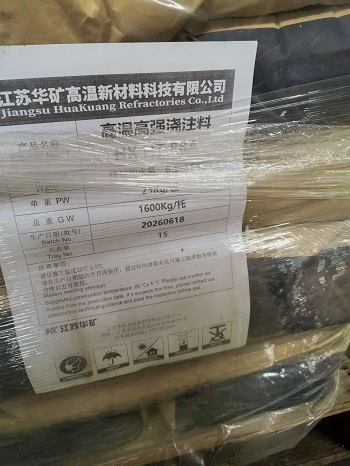
thermal insulation / insulating material
We did three things:
- Realigned the burner.
- Cut out the cracked section and patched it with a low-cement castable.
- Changed the heating schedule to avoid rapid temperature swings.
The repair cost £1,200. The furnace ran another four years before relining. If they had ignored the crack, the lining would have failed within six months.
Preventing Refractory Cracking
Prevention is cheaper than repair. Here is what works.
Control the heating rate. Follow the manufacturer’s schedule. Never exceed 50°C per hour during heat-up.
Avoid thermal shock. Do not open the door suddenly when the furnace is hot. Do not charge cold scrap into a hot furnace without preheating.
Maintain the burner. A misaligned or dirty burner causes hot spots. Hot spots cause cracks.
Use the right flux. Check that your flux is compatible with your refractory. If in doubt, ask the supplier.
Train operators. Most cracking is caused by human error. Teach operators how to charge, how to heat, and how to inspect.
Inspect regularly. A weekly visual inspection catches cracks early. A thermal camera once a month finds hidden hot spots.
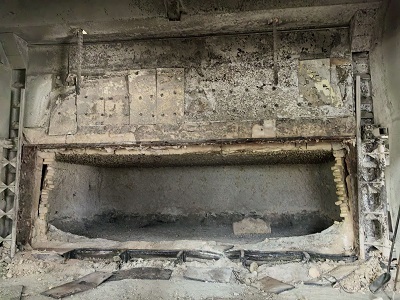
furnace door sill with damaged insulation in a reverberatory furnace
Keep records. Log temperature, cycles, and repairs. Patterns emerge. You will see when a lining is nearing the end of its life.
A Simple Diagnosis and Repair Checklist
- Is the crack wider than 3 mm? If yes, repair or replace.
- Is there metal staining? If yes, replace the lining.
- Is the shell hot near the crack? If yes, the crack is active. Act now.
- What caused the crack? Thermal shock, metal penetration, or mechanical damage?
- Choose the right repair method for the crack size.
- For castable repairs, cure and dry slowly. Do not rush.
- After repair, fix the root cause. Otherwise, it will crack again.
- Monitor weekly. Record crack width.
When to Call a Professional
Some repairs are safe to do yourself: injecting mortar into a small crack, applying a coating. Others require experience: cutting out a through-crack, replacing a large section, relining a furnace.
If you are not sure, call a refractory specialist. The cost of a professional repair is small compared to the cost of a failure.
Final Thoughts
Refractory cracking is not a death sentence. It is a signal. Diagnose it early, repair it properly, and fix the cause. Your furnace will reward you with longer life and lower energy costs.
In my 25 years, I have seen linings last 10 years with good care. I have also seen them fail in 6 months with neglect. The difference is not the material. It is the attention.
Check your lining this week. Look for cracks. Measure them. If something looks wrong, act. A small repair today prevents a major failure tomorrow.
Internal links: Furnace Maintenance Checklist, How to Optimize Burner Efficiency in Gas-Fired Aluminium Furnaces, Why Does My Aluminium Furnace Keep Shutting Down?
About the Author: Hu Shenyue is a veteran aluminium melting furnace expert with 25 years of hands-on experience in China, Southeast Asia, India, the UK, and Europe. He writes practical, experience-based content on furnace selection, maintenance, and optimisation at SmeltPro.