


Troubleshoot why your aluminium furnace keeps shutting down. Common causes: burner, thermocouple, gas supply, safety interlocks. 25 years of foundry experience.
Note: I use British spelling "aluminium" throughout, as most of my readers are in the UK, Europe, India, and Southeast Asia.
A furnace that keeps shutting down is trying to tell you something. It’s not being difficult. It’s protecting itself — or your operators — from a problem you haven’t found yet.
In 25 years, I’ve traced dozens of “mystery” shutdowns. The causes are almost always one of six things: flame detection, temperature control, gas supply, electrical faults, safety interlocks, or operator error. The trick is knowing where to look first.
Here’s how I diagnose it, step by step.
Start with the Error Code (If You Have One)
Modern furnaces have a control panel that logs fault codes. Before you touch anything, read the code. It will point you in the right direction.
Flame failure → burner, flame sensor, or gas supply
High temperature → thermocouple, controller, or stuck contactor
Low gas pressure → regulator, valve, or supply line
Safety interlock → door switch, emergency stop, or ventilation
If your furnace is old and has no diagnostics, you’ll have to work through the possibilities manually. Start with the most common causes.
Cause 1: Flame Detection Failure
This is the number one reason gas-fired aluminium furnaces shut down. The burner lights, then the flame sensor loses signal, and the safety system cuts the gas.
Why does this happen?
Dirty flame sensor. Soot or carbon buildup insulates the sensor. It can’t “see” the flame.
Wrong sensor position. If the sensor is not in the flame, it won’t detect it.
Weak flame signal. A lazy flame (from too much air or low gas pressure) may not be strong enough.
Faulty sensor. They do fail. Test with a multimeter.
I once spent three hours on a furnace in Malaysia that kept shutting down every 20 minutes. The flame sensor was clean. The gas pressure was fine. The problem was a pinhole leak in the gas line near the burner. Air was being drawn in, weakening the flame. A $5 clamp fixed it.
What to do: Clean the flame sensor with fine emery cloth. Check its position. Test the signal strength. If it’s weak, replace it.
Cause 2: Thermocouple or Temperature Controller Problems
The thermocouple tells the controller how hot the furnace is. If it lies, the controller may shut the furnace down to prevent overheating — or it may fail to shut it down when it should.
Symptoms:
- Furnace shuts down before reaching setpoint.
- Temperature reading jumps around.
- Furnace overheats and trips a high-limit switch.
In 2019, a foundry in India called me because their furnace kept shutting down at 700°C. The setpoint was 730°C. They had replaced the thermocouple twice. I checked the controller. The input filter was set wrong. It was reading a stray electrical signal. A five-minute parameter change solved it.
What to do: Check thermocouple wiring for loose connections. Verify the controller is configured for the correct thermocouple type (K, S, etc.). Calibrate with a handheld pyrometer. If the thermocouple is old, replace it.
Cause 3: Gas Supply Issues
Gas pressure fluctuations will trip a safety shutdown every time. The furnace is designed to lock out if pressure is too low (risk of explosion) or too high (risk of overfire).
Common causes:
Regulator failure. The regulator may be stuck or undersized.
Partially closed valve. Someone may have bumped it.
Condensation in the line. Especially in humid climates.
Supplier pressure drop. Happens during peak demand.
I remember a die casting plant in Thailand that had random shutdowns every afternoon. We monitored gas pressure for a week. At 2 p.m. every day, pressure dropped 20%. The gas supplier was diverting supply to another customer. The foundry installed a buffer tank. Problem solved.
What to do: Install a pressure gauge near the burner. Watch it during operation. If it fluctuates, call your gas supplier. If it’s stable, check the regulator and valves.
Cause 4: Electrical Faults
Electric furnaces shut down for different reasons. Resistance and induction furnaces rely on contactors, thyristors, and control boards. Any of these can fail.
Symptoms:
- Main breaker trips.
- Control panel goes dark.
- Heating elements stop drawing current.
A client in the UK had an electric resistance furnace that tripped the main breaker every time it reached 750°C. We traced it to a heating element that had sagged and touched the furnace shell. The insulation had failed. Replacing the element fixed it.
What to do: Check for loose wiring. Inspect heating elements for sagging or breakage. Test the contactor. Look for burn marks on control boards. If you’re not comfortable with electrical work, call a qualified engineer.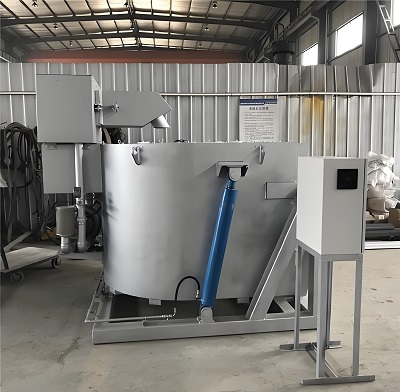
Cause 5: Safety Interlocks and Limits
Furnaces have safety devices that shut them down when something is wrong. These include:
High-temperature limit switch. Trips if the furnace overheats.
Door switch. Shuts off burner if the door opens.
Ventilation pressure switch. Ensures exhaust fan is running.
Emergency stop. Manual shutdown.
If any of these fail, the furnace won’t run. Or it will run, then shut down randomly.
I’ve seen more than one furnace shut down because a door switch was misaligned. The door looked closed, but the switch didn’t engage. A five-minute adjustment solved it.
What to do: Check each interlock manually. Test the high-limit by gently heating the thermocouple (or simulating). Make sure the ventilation fan is running and the pressure switch is working. Inspect door switches for wear.
Cause 6: Operator Error
Sometimes the furnace is fine. The operator isn’t.
Common mistakes:
Wrong setpoint. Someone changed it and forgot.
Improper startup sequence. Skipping a step triggers a safety lockout.
Overcharging. Too much scrap can block the burner or cause a temperature spike.
Skipping maintenance. A dirty burner or clogged filter causes shutdowns.
I once visited a foundry in Vietnam where the night shift had “mystery” shutdowns. The day shift had none. We watched the night operator. He was charging wet scrap. The moisture caused a flame failure. We trained him to pre-dry the scrap. No more shutdowns.
What to do: Review the startup procedure with all operators. Check the setpoint. Ensure scrap is dry and correctly sized. Make sure daily maintenance is actually being done.
A Real Case from Indonesia
In 2022, a foundry in Indonesia had a gas-fired crucible furnace that shut down 8–10 times per shift. They had replaced the thermocouple, the flame sensor, and the gas regulator. Nothing worked.
I spent two days on site. We monitored everything. The shutdowns happened only when the furnace was at full melt rate. The flame sensor signal was strong. Gas pressure was stable. Temperature was normal.
Then I noticed the exhaust hood. It was undersized. When the furnace ran at full rate, exhaust gases spilled out. The ambient temperature around the control panel rose above 60°C. The control board was overheating and resetting.
We installed a simple fan to cool the panel. The shutdowns stopped.
That’s the kind of problem you can’t find in a manual. You have to be there.
A Simple Troubleshooting Flowchart
When your furnace shuts down, ask:
- Is there an error code? Read it.
- Is the flame sensor clean and positioned correctly?
- Is the thermocouple reading accurate? Check with a pyrometer.
- Is gas pressure stable during operation?
- Are all safety interlocks functioning?
- Is the control panel overheating?
- Are operators following the correct procedure?
Work through these in order. Most problems will be found in steps 1–3.
When to Call a Professional
Some issues are safe to fix yourself: cleaning a sensor, checking a gas pressure gauge, resetting a breaker. Others require a qualified engineer: gas train repairs, electrical control board replacement, refractory work.
Don’t risk your safety or your furnace. If you’re not sure, call someone who knows.
Final Thoughts
A furnace that keeps shutting down is not a mystery. It’s a symptom. Find the cause, fix it, and the shutdowns will stop.
In my experience, 80% of shutdowns come from three things: dirty flame sensors, faulty thermocouples, and gas pressure problems. Check those first. Then look deeper.
And remember: the best troubleshooting is prevention. A good maintenance checklist — like the one I’ve written about — will prevent most of these shutdowns before they happen.
Internal links: Furnace Maintenance Checklist, How to Optimize Burner Efficiency in Gas-Fired Aluminium Furnaces, How to Choose a Furnace Supplier – 10 Questions to Ask.
About the Author: Hu Shenyue is a veteran aluminium melting furnace expert with 25 years of hands-on experience in China, Southeast Asia, India, the UK, and Europe. He writes practical, experience-based content on furnace selection, maintenance, and optimisation at SmeltPro.