

Selecting a rotary melting furnace for aluminium scrap processing comes down to six things: your feedstock, the furnace capacity, the salt flux system, the energy source, the emissions controls, and the supplier’s service capability. Get these right, and you have a furnace that handles contaminated scrap efficiently. Get them wrong, and you have a furnace that consumes too much salt, loses too much metal, and breaks down too often.
I have spent 25 years working with aluminium melting furnaces in China, Southeast Asia, India, the UK, Europe, and North America. Rotary furnaces are the workhorses of secondary aluminium recycling. They handle material that other furnaces cannot. But they are not all the same. Here is how I select one.
Start with Your Feedstock
The rotary furnace is designed for contaminated scrap. But not all contaminated scrap is the same. The furnace you choose depends on what you feed it.
| Feedstock Type | Contamination Level | Recommended Rotary Design |
|---|---|---|
| Used beverage cans (UBC) | Medium | Single-pass rotary with salt flux |
| Turnings, chips | High (oil, moisture) | Rotary with pre-treatment and salt flux |
| Dross, sweated pig | Very high | Rotary with salt flux and dross press |
| Mixed post-consumer scrap | Variable | Tilting rotary with salt flux |
| Clean extrusion offcuts | Low | Rotary may be overkill — consider reverb |
The rule I give every client: define your feedstock before you talk to a supplier. A rotary furnace that works well for UBC may not work for dross. A furnace that handles dross may be too expensive for clean scrap.
Research on aluminium scrap melting confirms this. Furnace selection depends on the initial metal content, type and content of impurities, geometry of the scrap, frequency of alloy changes, and desired product quality. These variables determine whether a rotary furnace is the right choice — and what type.
Choose the Right Rotary Furnace Type
There are two main types of rotary furnaces for aluminium scrap: the fixed-axis rotary furnace and the tilting rotary furnace.
| Feature | Fixed-Axis Rotary | Tilting Rotary |
|---|---|---|
| Discharge | Manual or mechanical | Hydraulic tilting |
| Salt factor | 0.9–2.0 | 0.4–0.8 |
| Metal recovery | 85–90% | 90–95% |
| Labour | Higher | Lower |
| Capital cost | Lower | Higher |
| Best for | Small to medium plants | Medium to large plants |
The tilting rotary furnace is the modern standard for efficient scrap processing. It discharges metal and slag separately by tilting, which reduces salt consumption and improves metal recovery. The salt factor can be as low as 0.4–0.8, compared to 0.9–2.0 for fixed-axis furnaces.
If you process more than 20 tonnes per day, the tilting rotary furnace is usually the right choice. If you process less, a fixed-axis furnace may be sufficient.
Size the Furnace Correctly
Capacity is not just about tonnes per day. It is about batch size, cycle time, and charge composition.
A rotary furnace is a batch furnace. Each cycle includes charging, melting, refining, and discharging. Cycle time depends on the scrap type, the burner power, and the salt flux ratio.
| Furnace Capacity | Typical Batch Size | Cycle Time | Daily Output (2 shifts) |
|---|---|---|---|
| 3 tonnes | 2–2.5 tonnes | 3–4 hours | 10–12 tonnes |
| 5 tonnes | 3.5–4 tonnes | 4–5 hours | 14–16 tonnes |
| 8 tonnes | 5–6 tonnes | 5–6 hours | 18–22 tonnes |
| 12 tonnes | 8–9 tonnes | 6–7 hours | 24–28 tonnes |
Do not buy a furnace that is too large. A large furnace running at low utilisation wastes energy and loses more metal to oxidation. Do not buy a furnace that is too small. You will run extra shifts and wear out the equipment.
I recommend sizing the furnace at 120% of your average daily requirement. That gives you room to grow without running at full capacity every day.
Evaluate Salt Flux System
Salt flux is essential in rotary furnaces. It protects the molten metal from oxidation and collects oxides from the scrap. But salt consumption is a major operating cost.
The salt factor — the ratio of salt to scrap — determines how much salt you use. For tilting rotary furnaces, the salt factor can be as low as 0.4–0.8. For fixed-axis furnaces, it is typically 0.9–2.0.
Ask the supplier for a guaranteed salt factor for your feedstock. If they cannot provide one, they do not know their furnace well enough.
Also check the salt slag handling system. Rotary furnaces generate 200–400 kg of salt slag per tonne of processed material. That slag must be treated and disposed of. If the supplier does not have a solution for salt slag, you will have an environmental problem.
Assess Energy Consumption
Energy is the largest operating cost in rotary furnace operation. The specific energy consumption (SEC) depends on the furnace design, burner system, and heat recovery.
| Furnace Type | Typical SEC (kWh/t) | Best Achievable |
|---|---|---|
| Legacy rotary | 900–1,100 | — |
| Modern rotary with recuperator | 700–900 | 600 |
| Modern rotary with oxygen enhancement | 600–800 | 550 |
Ask for a guaranteed SEC figure. If the supplier cannot provide one, walk away. A furnace without a guaranteed energy figure is a gamble.
I have written about how to improve heat transfer efficiency in a rotary furnace. The principles apply to every rotary furnace selection.
Check Emissions and Compliance
Rotary furnaces generate emissions — NOx, CO, particulate matter, and salt slag. Regulations are tightening in all your key markets.
In Europe, the EU’s CBAM now covers aluminium products. The emissions from your melting furnace affect your export costs. In India, emission standards for induction furnace units are tightening. In Southeast Asia, governments are introducing stricter environmental rules.
Ask the supplier for emission data. Not just “low NOx” claims. Actual measured figures. Ask for the flue gas composition at the design operating point.
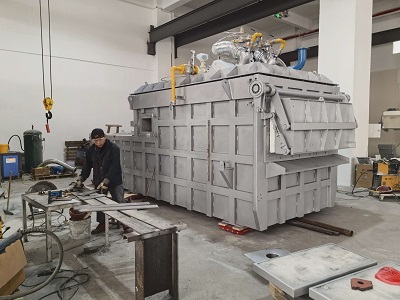
Sidewell Furnace
Also check the salt slag handling. In some markets, salt slag is classified as hazardous waste. You need a treatment and disposal plan before you buy.
Evaluate the Supplier’s Service Capability
A rotary furnace is a complex machine. It has a rotating drum, a burner system, a hydraulic tilting system, a salt flux system, and a control system. Things will break.
Ask these questions:
How many service engineers do you have in my region?
Do you have a spare parts warehouse in my country?
What is the lead time for critical parts: burner nozzle, refractory, hydraulic pump?
Can you provide remote diagnostics?
Can I visit a reference site processing similar scrap?
I have written about how to evaluate the reliability of Chinese aluminium furnace manufacturers. The same questions apply to any supplier.
A Real Case from Southeast Asia
In 2023, a recycling plant in Malaysia was selecting a rotary furnace for mixed post-consumer scrap. They processed 15 tonnes per day. They had quotes from a Chinese supplier and a European supplier.
The European quote: $420,000. Guaranteed SEC: 650 kWh/t. Salt factor: 0.6. Local service: yes.
The Chinese quote: $260,000. Guaranteed SEC: 720 kWh/t. Salt factor: 0.8. Local service: one engineer in Kuala Lumpur.
The plant manager wanted the Chinese furnace on price. But he was concerned about salt consumption and service.
We visited a reference site in Indonesia. The Chinese furnace was running mixed scrap. The salt factor was 0.85. The metal recovery was 88%. The service engineer was on site during commissioning.
We negotiated the contract: performance guarantee with penalties, local spare parts stock, and a 12-month warranty.
They chose the Chinese furnace. Two years later, it is running with zero unplanned downtime. The energy consumption is 735 kWh/t. The salt factor is 0.82. The total saving was over $120,000.
That is the reality of rotary furnace selection. The equipment matters. The supplier matters more.
A Simple Selection Checklist
Define your feedstock: UBC, turnings, dross, mixed scrap.
Choose furnace type: fixed-axis or tilting rotary.
Size the furnace at 120% of average daily requirement.
Ask for guaranteed salt factor for your feedstock.
Ask for guaranteed SEC. Target 600–800 kWh/t.
Check emissions data. Check salt slag handling.
Evaluate supplier: reference site, local service, spare parts.
Calculate total cost of ownership over five years.
Visit a reference site processing similar scrap.
Get the performance guarantee in writing.
Final Thoughts
Selecting a rotary melting furnace for aluminium scrap processing is a system design problem, not a procurement transaction. The furnace must match your feedstock, your salt flux system, your energy source, and your environmental requirements.
In my 25 years, I have seen plants succeed with rotary furnaces and fail with them. The difference is not the furnace type. It is the thinking behind the selection.
Start with the feedstock. Then match the furnace. Then evaluate the supplier. You will get a furnace that lasts — and a process that wins.
Internal links: How to Improve Heat Transfer Efficiency in a Rotary Furnace, How to Choose a Secondary Aluminium Melting Furnace for Ingot Production, How to Reduce Metal Loss in Secondary Aluminium Melting for Ingot Production
About the Author: Hu Shenyue is a veteran aluminium melting furnace expert with 25 years of hands-on experience in China, Southeast Asia, India, the UK, and Europe. He writes practical, experience-based content on furnace selection, maintenance, and optimisation at SmeltPro.