

New or used aluminium melting furnace? Compare costs, risks, and performance. Based on 25 years of foundry experience. Make the right choice for your plant.
The choice between a new and a used aluminium melting furnace comes down to three things: your budget, your risk tolerance, and your production requirements. A new furnace gives you warranty, latest efficiency, and zero unknown history. A used furnace gives you lower upfront cost and faster delivery — but you inherit whatever the previous owner did to it.
I’ve helped foundries buy both. I’ve seen a used furnace last 15 years with proper care. I’ve also seen a “bargain” used furnace cost more in repairs in six months than the purchase price. Here’s how to decide.
When a New Furnace Makes Sense
A new furnace is the safe choice. You know its history — because there isn’t one. You get:
Manufacturer warranty — typically 12–24 months on major components.
Latest energy efficiency — modern furnaces use 20–30% less energy than models from 10 years ago.
Full documentation — drawings, manuals, spare parts lists.
Installation and commissioning support — the supplier’s engineers set it up.
Training — your operators learn on a clean machine.
For a foundry running high-value alloys, or one that cannot afford downtime, a new furnace is usually the right call. I worked with a die casting plant in Malaysia that bought a used furnace to save money. It broke down four times in the first year. The lost production cost more than the difference between new and used.
When a Used Furnace Makes Sense
A used furnace can be a smart buy — if you know what you’re looking at. It works best when:
Your budget is tight. A used furnace can cost 40–60% less than new.
You need it fast. Delivery is weeks, not months.
You have maintenance capability. If your team can rebuild a burner or replace a lining, you can handle a used furnace.
The furnace type is simple. Crucible furnaces and small reverberatory furnaces are easier to inspect and repair than complex induction systems.
I once helped a small jobbing foundry in India buy a used 500 kg crucible furnace. They paid 35% of the new price. We inspected it carefully, replaced the crucible and burner nozzle, and it ran for six years. That was a good deal.
But I’ve also seen the opposite. A foundry in Thailand bought a used 2-tonne reverberatory furnace without inspection. The refractory was cracked. The burner was corroded. They spent 80% of the purchase price on repairs before it melted a single tonne.
What to Check Before Buying a Used Furnace
If you’re considering a used furnace, inspect it like your business depends on it. Because it does.
Refractory lining — Look for cracks, spalling, and corundum growth. A lining replacement can cost 20–40% of the furnace price.
Burner and combustion system — Check the burner nozzle, diffuser, and gas train. Soot buildup means poor combustion. A new burner might cost $3,000–$8,000.
Control system — Old PLCs may be obsolete. Can you get spare parts? Is the software still supported?
Structural steel — Look for rust, warping, and weld cracks. A warped shell can affect lining life.
Hydraulic system — For tilting furnaces, check cylinders, hoses, and pumps. Leaks are common.
Documentation — Ask for original manuals, drawings, and maintenance records. If they don’t exist, walk away.
Test run — If possible, run the furnace for at least 4 hours. Watch the temperature control. Listen for unusual noises.
I always tell clients: “If the seller won’t let you inspect it properly, that’s your answer.”
Total Cost of Ownership: The Real Comparison
Purchase price is only the beginning. Here’s how new and used typically compare over five years:
| Cost Factor | New Furnace | Used Furnace |
|---|---|---|
| Purchase price | 100% | 40–60% |
| Installation | Included or quoted | Often extra |
| Refractory life | 5–8 years | Unknown, possibly 1–3 years |
| Energy efficiency | Latest standard | 10–30% higher consumption |
| Maintenance year 1 | Low | Medium to high |
| Spare parts availability | Good | Variable |
| Downtime risk | Low | Medium to high |
| Warranty | 12–24 months | None |
A used furnace that costs 50% of new but uses 25% more energy will cost more over five years in most cases. I’ve run this calculation with clients many times. The used furnace only wins if the price is very low and the furnace is in excellent condition.
A Real Case from Vietnam
In 2022, a die casting plant in Vietnam asked me to help them choose between a new 1-tonne electric resistance furnace and a used 1-tonne gas-fired furnace.
The new electric furnace: $45,000. Energy cost: $0.12 per kg melted. Metal loss: 1.2%.
The used gas furnace: $18,000. Energy cost: $0.09 per kg melted. Metal loss: 2.8%.
On paper, the used gas furnace looked cheaper. But when we calculated total cost over five years:
New electric: $45,000 + (5 years × 2,000 tonnes/year × $0.12) + metal loss cost = $45,000 + $1,200,000 + $60,000 = $1,305,000
Used gas: $18,000 + (5 years × 2,000 × $0.09) + metal loss cost + likely lining replacement = $18,000 + $900,000 + $140,000 + $15,000 = $1,073,000
The used gas furnace was still cheaper. But the gap was smaller than they thought. And the used furnace had no warranty, higher downtime risk, and would likely need a new lining within two years.
They chose the used gas furnace. But they negotiated a 30-day warranty from the seller and budgeted for a lining replacement in year two. That was a smart approach.
My Advice: Match the Furnace to Your Situation
Buy new if:
- You run high-value alloys or aerospace work.
- You cannot afford downtime.
- You need warranty and supplier support.
- Your team lacks maintenance experience.
Buy used if:
- Your budget is tight and you have maintenance capability.
- The furnace is simple (crucible or small reverb).
- You can inspect it thoroughly before purchase.
- You have a plan for likely repairs.
There is no universal right answer. But there is a wrong answer: buying a used furnace without inspection, or buying a new furnace you can’t afford to run.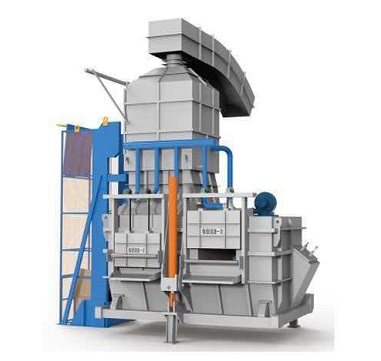
A Simple Checklist
Define your production requirement first.
Set a realistic budget including installation and first-year maintenance.
For used furnaces, inspect refractory, burner, controls, and structure.
Ask for maintenance records. If none, assume the worst.
Calculate total cost of ownership over five years.
Negotiate a short warranty on used equipment if possible.
Budget for a lining replacement in year one or two for used furnaces.
Train your operators on the specific furnace, new or used.
Final Thoughts
A furnace is a 10–15 year investment. The purchase price is a small part of the total cost. Energy, metal loss, maintenance, and downtime matter more.
I’ve seen foundries succeed with both new and used furnaces. The ones that succeed are the ones that did their homework. They inspected. They calculated. They planned for repairs.
If you’re not sure, ask someone who has been there. That’s what I do for my clients. And that’s what this blog is for.
Internal links: How to Choose the Right Aluminium Melting Furnace, Aluminium Melting Furnace Buying Guide 2026,
About the Author: Hu Shenyue is a veteran aluminium melting furnace expert with 25 years of hands-on experience in China, Southeast Asia, India, the UK, and Europe. He writes practical, experience-based content on furnace selection, maintenance, and optimisation at SmeltPro.