

A380 and ADC12 are the two most common aluminium die casting alloys in the world. They look similar on a spec sheet. They behave differently in a furnace. If you run both alloys on the same line — as many foundries do — you need to understand the temperature gap between them.
I have spent 25 years setting up and troubleshooting die casting furnaces. The number one cause of inconsistent casting quality I see is wrong furnace temperature. Not the die. Not the alloy. The furnace.
Here is how to get it right for both alloys.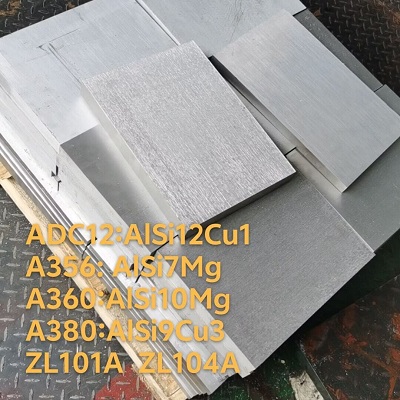
The Critical Difference Between A380 and ADC12
A380 and ADC12 are both Al-Si-Cu alloys. The difference is in the silicon and copper content.
| Property | A380 | ADC12 |
|---|---|---|
| Silicon content | 7.5–9.5% | 9.6–12.0% |
| Copper content | 3.0–4.0% | 1.5–3.5% |
| Liquidus temperature | ~593°C | ~580°C |
| Solidus temperature | ~538°C | ~515°C |
| Recommended melt temperature | 680–720°C | 660–700°C |
| Recommended die temperature | 180–250°C | 180–220°C |
A380 has less silicon and more copper than ADC12. That gives it a higher liquidus temperature — about 20°C higher. In practice, A380 needs to be poured 20–30°C hotter than ADC12 to achieve the same fluidity and fill performance.-2
I have seen foundries switch from ADC12 to A380 without adjusting the furnace setpoint. The result: cold shuts, incomplete fills, and a scrap rate that jumps from 3% to 10%. The furnace was fine. The temperature was wrong.
Recommended Temperature Ranges
The numbers below are what I use as starting points. Every furnace, die, and part geometry is different. But these ranges work for the majority of HPDC applications.
A380
| Stage | Temperature Range | Notes |
|---|---|---|
| Melting furnace | 680–720°C | Higher end for thin-wall parts |
| Holding furnace | 660–690°C | Maintain ±5°C |
| Shot sleeve (metal at pour) | 670–700°C | Measure at the sleeve, not the furnace |
| Die surface | 180–250°C | Above 200°C for complex geometry |
ADC12
| Stage | Temperature Range | Notes |
|---|---|---|
| Melting furnace | 660–700°C | Lower range than A380 |
| Holding furnace | 640–670°C | Maintain ±5°C |
| Shot sleeve (metal at pour) | 650–680°C | Measure at the sleeve |
| Die surface | 180–220°C | Can run slightly cooler than A380 |
A research study on A380 high-pressure die casting confirmed that a die temperature above 200°C is necessary for sound parts with complex geometry.-10 For ADC12, the window is slightly lower because the alloy’s higher silicon content gives it better fluidity at lower temperatures.
General industry guidelines for die casting alloys confirm the 660–720°C melting range, with the exact setpoint depending on the alloy and part design.-3 For A380 specifically, the higher liquidus point means it sits at the top of that range. For ADC12, the middle to lower end works better.
Why Furnace Temperature Control Matters More Than You Think
A furnace that swings ±15°C will produce inconsistent castings. A furnace that holds ±3°C will produce consistent castings. The difference is not the die. It is the furnace control.
When the temperature is too high:
Hydrogen absorption increases. The melt picks up gas, and you get porosity.-44
Oxidation accelerates. More dross, more metal loss.
The die overheats. Soldering, flashing, and thermal fatigue increase.
Cycle time extends. You wait longer for solidification.
When the temperature is too low:
Fluidity drops. The metal freezes before it fills thin walls.
Cold shuts appear at the end of the flow path.
Incomplete fills ruin the part.-
Shot weight variation increases. Some shots are heavy, some are light.
I visited a plant in Guangdong that ran A380 at 660°C — the setpoint they had used for ADC12. Their rejection rate was 11%. We raised the setpoint to 690°C. The rejection rate dropped to 3.2% within three days. The die was the same. The alloy was the same. Only the furnace temperature changed.
How to Set the Right Temperature for Your Furnace
Do not guess. Measure. Here is the process I use.
Step 1: Measure the actual metal temperature at the shot sleeve.
The furnace setpoint is not the metal temperature at the shot sleeve. There is a temperature drop during transfer and in the ladle. I have measured drops of 30–50°C between the holding furnace and the shot sleeve. If your furnace is set to 690°C but the metal arrives at 650°C, you will have cold shuts — regardless of what the controller says.
Use a handheld immersion pyrometer. Measure at the shot sleeve, not in the furnace. Do this at least once per shift.
Step 2: Verify furnace temperature uniformity.
A furnace can have a correct setpoint but poor uniformity. The metal near the heating elements is hotter than the metal near the door. This causes inconsistent fill and localised defects.
Use a thermal camera or multiple thermocouples to map the temperature across the bath. If you see more than 10°C variation, improve circulation or add a second thermocouple.
Step 3: Adjust based on part geometry.
A thin-wall part (2–3 mm) needs higher metal temperature than a thick-wall part (5–8 mm). A complex geometry with long flow paths needs more heat to reach the far end of the cavity. A simple, compact part can run cooler.
For A380 with 2.5 mm walls, I recommend a holding furnace temperature of 680–700°C. For the same part in ADC12, 660–680°C is sufficient.
Step 4: Monitor and record.
Keep a log of metal temperature at the shot sleeve, rejection rate, and defect type. After two weeks, you will see the relationship. If rejection rises when temperature drops, you know your window. If rejection rises when temperature rises, you have a different problem — likely gas porosity.
The Shot Sleeve Temperature Factor
Most foundries focus on the furnace. Few pay attention to the shot sleeve. That is a mistake.
A cold shot sleeve causes chill layers to form on the metal surface. These chill layers break off during injection and cause turbulence, porosity, and cold shuts. Research on shot sleeve temperature in aluminium HPDC found that at a sleeve temperature of 280°C, chill layer formation is minimised, trimmed surface quality is best, and casting density is highest — especially for complex parts like valve bodies.-61
The practical takeaway: preheat your shot sleeve before production. Maintain it above 200°C. If your sleeve is running cold, the best furnace temperature in the world will not save you.
Temperature Optimization Checklist
Use this checklist when setting up a new alloy or troubleshooting quality problems.
- Confirm the alloy. A380 and ADC12 need different setpoints.
- Measure metal temperature at the shot sleeve, not just the furnace.
- Check furnace temperature uniformity. Target ±5°C across the bath.
- Verify shot sleeve temperature. Preheat to at least 200°C.
- Adjust based on wall thickness. Thin walls need higher temperature.
- Log temperature, rejection rate, and defect type for two weeks.
- Tune the burner or heating elements to maintain setpoint. Do not let it swing.
- Train operators to record temperature every shift.
Common Mistakes I See
Running A380 at ADC12 temperatures. This is the most common error. A380 needs 20–30°C more heat. If you switch alloys, change the setpoint.
Trusting the controller display. The thermocouple may drift. The controller may be misconfigured. Always verify with a handheld pyrometer.
Ignoring shot sleeve temperature. A cold sleeve ruins metal quality before the metal even reaches the die.
Running the furnace too hot to “improve fluidity.” Higher temperature does improve fluidity — but it also increases porosity and oxidation. There is a sweet spot. Find it and stay there.
A Real Case from Southeast Asia
In 2024, a die casting plant in Rayong, Thailand, was running both A380 and ADC12 on the same holding furnace. They changed alloys twice per week. Their rejection rate was 8% overall.
I watched them switch from ADC12 to A380 without changing the setpoint. The furnace stayed at 670°C. That was fine for ADC12. For A380, it was 15–20°C too cold.
We set up two recipes on the furnace controller: one for A380 at 690°C, one for ADC12 at 665°C. The operator selects the recipe when changing alloys. No more manual adjustment.
The rejection rate dropped to 3.4% within two weeks. The energy consumption dropped by 4% because they were no longer running A380 too hot or ADC12 too cold. Both alloys were running at their optimum.
Final Thoughts
A380 and ADC12 are not the same. The 20°C difference in liquidus temperature translates directly to a 20–30°C difference in furnace setpoint. If you ignore it, you pay for it in scrap.
The furnace is the first place to look when quality varies. Measure the metal temperature at the shot sleeve. Verify uniformity. Check the shot sleeve itself. Then adjust the setpoint to match the alloy.
In my 25 years, I have seen foundries transform their quality by doing nothing more than getting the furnace temperature right. It is the simplest fix. It is also the one most often overlooked.
Internal links: How to Fix a Furnace That Is Not Reaching Setpoint Temperature, How to Choose the Right Crucible for Your Aluminium Melting Furnace, How Die Casting Furnace Technology Is Evolving for Electric Vehicle Manufacturing.
About the Author: Hu Shenyue is a veteran aluminium melting furnace expert with 25 years of hands-on experience in China, Southeast Asia, India, the UK, and Europe. He writes practical, experience-based content on furnace selection, maintenance, and optimisation at SmeltPro.