


Metal loss in secondary aluminium melting is not a single problem. It is a chain of losses — oxidation at the melt surface, metal trapped in dross, salt slag carryover, and furnace atmosphere reactions. Each link in the chain has a different cause and a different fix.
In my 25 years, I have seen secondary aluminium plants lose anywhere from 2% to 18% of their metal input. The difference is not the furnace. It is the process. A well-run 9.5-tonne reverberatory furnace can achieve 8–10% melt loss. A poorly run one loses 14–18%-1. That gap is worth millions.
Here is how I reduce metal loss in secondary aluminium melting for ingot production.
Understand Where the Metal Goes
Before you fix anything, understand the loss mechanisms.
| Loss Type | Typical Range | Primary Cause |
|---|---|---|
| Surface oxidation | 1–3% (clean scrap) | Molten metal exposed to air |
| Surface oxidation | 5–8% (contaminated scrap) | High surface area, coatings, moisture |
| Dross metal content | 20–50% of dross weight | Poor skimming, insufficient fluxing |
| Salt slag carryover | 200–400 kg per tonne processed | Rotary furnace operation |
| Furnace atmosphere reactions | Variable | Oxygen and moisture in furnace |
For clean wrought alloys, oxidation losses during remelting typically range from 1–3%. For contaminated or heavily oxidised scrap, that figure rises to 5–8%. Net metal recovery from mixed post-consumer scrap rarely exceeds 85–90% under conventional pyrometallurgical processing.
The goal is not to eliminate all loss. The goal is to move from the high end of that range to the low end.
Step 1: Control Melt Temperature — The Single Biggest Factor
Every 10°C above the minimum required melting temperature increases oxidation loss. I have seen plants run at 780°C because “it melts faster.” Yes, it melts faster. It also oxidises faster.
For secondary aluminium ingot production, the melt temperature should be 700–730°C. Higher temperatures accelerate the oxidation reaction and increase hydrogen absorption. Lower temperatures slow the melt and can cause incomplete fusion.
A study on melting efficiency in a secondary aluminium foundry identified temperature control as one of the five key variables affecting melt loss, alongside charging sequence, charge make-up, fluxing, and dross press procedure.
The practical rule I give operators: set the furnace to the lowest temperature that achieves the required melt rate. For ADC12 ingot production, that is usually 710–720°C. For pure aluminium ingots, 680–700°C is sufficient.
Step 2: Reduce Contact Between Molten Aluminium and Air
Oxidation happens at the surface. The more surface you expose, and the longer you expose it, the more metal you lose.
Keep the furnace door closed. Every time the door opens, cold air rushes in and hot air escapes. The surface oxidises. Train operators to open the door only when charging or skimming.
Maintain a protective cover. A cover flux creates a barrier between the melt and the atmosphere. For secondary aluminium, a chloride-based flux (NaCl-KCl-cryolite system) works well. It melts and forms a protective layer. The international standard uses this system to efficiently strip oxides and achieve near-zero aluminium content in the slag.
Charge below the surface. When adding scrap to a molten bath, submerge it quickly. Do not let it float on the surface where it oxidises.
Reduce melt surface area. A deep, narrow bath exposes less surface than a wide, shallow one. If you have a choice in furnace design, this matters.
Research on inert gas protected melting shows that maintaining oxygen content inside the furnace at ≤0.5% can reduce the aluminium melt oxidation loss rate to below 1%-. For high-value alloys, this is worth the investment.
Step 3: Optimise Charging Practice
How you charge the furnace affects how much metal you lose.
Pre-treat your scrap. Crushing, de-oiling, and drying reduce surface area and moisture content. This is the first line of defence against oxidation loss. Scrap with paint, oil, or moisture loses significantly more metal during melting. One study found that metal losses can reach 15% when melting raw material with lacquer coating directly-.
Use the right charge mix. Research on melting efficiency found that specific charge make-ups — such as old roll (O/R) with cans, wire, and extrusions — reduced melt loss compared to mixed or contaminated charges.
Charge continuously, not in large batches. Continuous melting keeps the bath temperature stable and reduces the time molten metal sits exposed to air. The same study identified continuous melting as a factor that diminished melt loss.
Avoid overcharging. Filling the furnace beyond 80–85% of capacity reduces freeboard and increases turbulence. The burner cannot melt efficiently. Oxidation increases.
Step 4: Use Flux Correctly
Flux is not a cost. It is an investment. Used correctly, it pays for itself many times over in recovered metal.
Cover flux. Applied to the melt surface during holding, it creates a barrier against oxidation.
Remelting flux. For heavily contaminated scrap, a remelting flux helps separate metal from oxide. The NaCl-KCl-cryolite system is standard for this application.
Salt flux for chips and fines. Machining chips have a high surface-to-volume ratio and are prone to intense oxidation. Research on salt flux recycling of chips achieved over 99.5% clean aluminium collection in a short period, with over 99% of salts extracted and reused. The same study found that this approach increased profits by no less than $0.4 per kg compared to conventional technologies.
The metal yield from salt flux treatment depends on the ratio. When the weight ratio of salt flux to aluminium scrap is 1.5, the big metal bead yield is 97.1%. At a ratio of 1.0, it is 94.8%. At 0.5, it drops to 92.4%.
I recommend measuring your salt factor and adjusting based on scrap quality. For clean scrap, less salt. For contaminated scrap, more.
Step 5: Improve Dross Management
Dross is not waste. It is metal you paid for and did not recover. Typical dross contains 15–80% metallic aluminium.
Skim less often. Every skim exposes fresh metal to the atmosphere. If you skim every 20 minutes, you are losing metal. Skim every 45 minutes, or when the dross layer reaches a thickness that interferes with melting.
Skim gently. Do not stir the melt. Use a skimming tool that drains metal back into the furnace.
Use a dross press. A dross press squeezes residual metal from the dross. This is standard practice in well-run secondary aluminium plants. The melting efficiency study explicitly identified dross press procedure as one of the variables affecting melt loss.
Process hot dross immediately. Hot dross oxidises rapidly. The longer it sits, the more metal you lose. Innovative techniques combining superimposed extrusion with supergravity separation have achieved 95.78% total metallic aluminium recovery from hot dross under optimised conditions. Pilot-scale validation yielded 94.88% recovery.
Step 6: Control the Furnace Atmosphere
The atmosphere inside your furnace matters. If it is rich in oxygen or moisture, oxidation increases.
Check for air leaks. A furnace door that does not seal properly draws in air. This is the most common atmosphere problem I find.
Tune the burner. Too much excess air increases oxygen in the furnace. Use a flue gas analyser to set O₂ at 2–4%. I have written about burner efficiency in detail.
Reduce moisture. Wet scrap, damp refractories, and humid air all increase oxidation. Pre-dry scrap before charging. Store under cover.
Consider inert gas blanketing. For high-value alloys, nitrogen or argon blanketing can reduce oxygen to below 1%. The cost is justified when the metal value is high.
Step 7: Train Operators and Measure Everything
Most metal loss is caused by operator habits. Wet scrap. Overcharging. Excessive skimming. Running too hot. Leaving the door open.
Train operators on the relationship between their actions and the loss rate. Show them the monthly metal balance. When they see that skimming every 20 minutes costs the plant $50,000 per year, they change their behaviour.
Measure your metal loss weekly. Weigh the metal charged and the metal poured. The difference is total loss. Weigh the dross and estimate metal content. Track loss per tonne over time.
You cannot improve what you do not measure.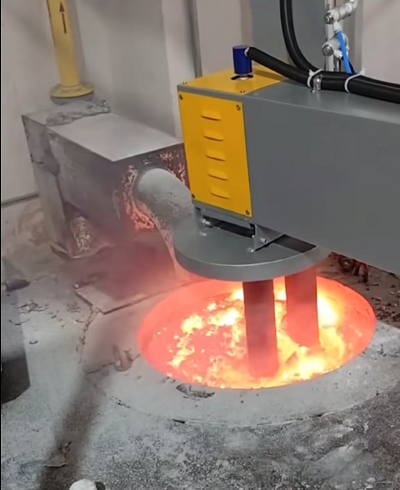
A Real Case from Southeast Asia
In 2023, a secondary aluminium plant in Malaysia was producing ADC12 ingots. Their metal loss was 12.8%. They were skimming every 20 minutes. The furnace was running at 760°C. Scrap was stored outdoors and charged wet after rain.
We made four changes:
Lowered the melt temperature from 760°C to 720°C.
Changed skimming frequency from every 20 minutes to every 45 minutes, with a dross press.
Built a covered drying rack for scrap. No more wet charging.
Added a cover flux during holding.
Results after one month:
| Metric | Before | After | Improvement |
|---|---|---|---|
| Metal loss | 12.8% | 7.4% | 5.4% reduction |
| Dross metal content | 42% | 26% | 16% reduction |
| Energy consumption | 890 kWh/t | 756 kWh/t | 15% reduction |
| Annual metal savings | — | $340,000 | — |
| Investment | — | $8,500 | Payback: 1 week |
The plant manager called me six months later. Metal loss was holding at 7.2%. The furnace was running cleaner. The ingot surface quality had improved. And the scrap rate on downstream customers had dropped.
A Simple Checklist to Reduce Metal Loss
- Set melt temperature to the minimum required. Do not run hot.
- Keep the furnace door closed except when charging or skimming.
- Pre-treat scrap: crush, de-oil, dry.
- Use cover flux during holding.
- Skim less often — every 45 minutes, not every 20.
- Use a dross press to recover metal from dross.
- Process hot dross immediately.
- Check furnace door seals monthly.
- Tune the burner every three months.
- Measure metal loss weekly and track trends.
Final Thoughts
Metal loss in secondary aluminium melting is not inevitable. It is a manageable cost. With temperature control, good charging practice, proper fluxing, and disciplined skimming, most plants can cut loss by 3–5 percentage points.
On a plant melting 30 tonnes per day, that 3–5% represents 900–1,500 kg of recovered metal every day. At $2,500 per tonne, that is $2,250–$3,750 per day. Over a year, it is millions.
Start with temperature. Then look at charging. Then fix your skimming practice. You will see the difference in your dross pile and your profit.
About the Author: Hu Shenyue is a veteran aluminium melting furnace expert with 25 years of hands-on experience in China, Southeast Asia, India, the UK, Europe, and North America. He writes practical, experience-based content on furnace selection, maintenance, and optimisation at SmeltPro.
Internal links: How to Optimize Burner Efficiency in Gas-Fired Aluminium Furnaces, How to Reduce Oxidation Loss in Aluminium Melting Operations, Case Study – How a Chinese Expert Optimized an Aluminum Ingot Casting Line in Malaysia
About the Author: Hu Shenyue is a veteran aluminium melting furnace expert with 25 years of hands-on experience in China, Southeast Asia, India, the UK, and Europe. He writes practical, experience-based content on furnace selection, maintenance, and optimisation at SmeltPro.