By Manager Ding | Sales Manager, Juding Thermal Energy Technology
Background
In late 2022, I received an inquiry from a die-casting plant in Australia. The plant specializes in automotive structural components—parts that demand exceptional mechanical properties, minimal porosity, and absolute consistency. Their engineering manager, Mr. Walker, was direct from the start: “We’re not looking for a cheap furnace. We’re looking for a furnace that can deliver high-quality aluminum, hour after hour, without fail. If the melt quality drops, our parts fail. It’s that simple.”
That conversation set the tone for the entire project. This wasn’t about cost savings alone—it was about quality, reliability, and the ability to meet the exacting standards of the automotive industry.
The Challenge
The Australian plant faced a unique set of requirements that many furnaces simply could not meet:
1. Automotive-Grade Aluminum Quality
Structural components—such as chassis parts, suspension components, and battery housings—must meet strict standards for:
-
Porosity: Minimal gas content, especially hydrogen
-
Mechanical properties: Consistent tensile strength and elongation
-
Surface finish: No inclusions or defects
-
Traceability: Full documentation of melting parameters
The plant needed a furnace that could deliver consistent, high-quality aluminum with minimal hydrogen content and oxidation.
2. High Die-Casting Capacity
The plant runs two large-tonnage die-casting machines (over 2,500 tons) in continuous production. The melting furnace needed to:
-
Deliver a steady supply of aluminum
-
Match the cycle time of both machines
-
Avoid any interruption in production
3. Centralized Melting with Distributed Delivery
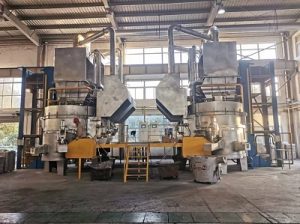
The plant’s layout required a central melting furnace that could supply molten aluminum to multiple die-casting machines. This meant:
-
Efficient melting in one location
-
Reliable transport of molten aluminum to each machine
-
Minimal temperature loss during transfer
4. Energy Efficiency and Low Burn Loss
Like any plant, they cared about operating costs. High burn loss and excessive energy consumption would directly impact their bottom line.
The Solution: QDW Tilting Central Melting Furnace
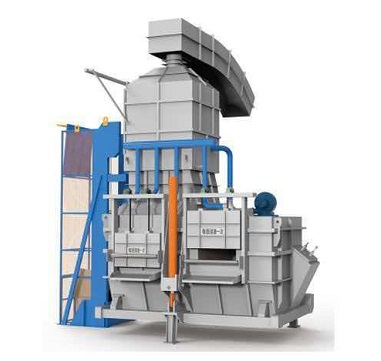
After reviewing their requirements and conducting a detailed technical assessment, I recommended the QDW Series Tilting Central Melting Furnace with the following configuration:
| Parameter | Specification |
|---|---|
| Furnace Type | QDW Tilting Central Melting Furnace |
| Melting Capacity | 3,000 kg/h |
| Temperature Control Accuracy | ±5℃ |
| Holding Temperature | 700-750℃ |
| Burn Loss | <0.8%-1.3% |
| Energy Consumption | 55-60 Nm³/t |
| Special Features | Degassing brick, tower preheating system, automatic fume hood |
Why This Configuration?
-
3,000 kg/h Capacity: Matched the combined demand of two large-tonnage machines, ensuring no production delays.
-
±5℃ Accuracy: Critical for maintaining consistent mechanical properties in structural components.
-
Degassing Brick: Removes hydrogen and impurities from the melt, directly addressing porosity concerns.
-
Tower Preheating System: Recovers waste heat to preheat aluminum material and combustion air, reducing energy consumption by 15%-20%.
-
Tilting Design: Allows for complete drainage and easy cleaning, minimizing contamination between batches.
-
Automatic Fume Hood: Maintains a clean workshop environment and complies with Australian environmental standards.
Project Timeline: From Inquiry to Full Production
November 2022 – Initial Inquiry
Mr. Walker contacted us through our website. We had an initial video call to discuss their quality requirements and production capacity.
December 2022 – Technical Assessment and Proposal
Our engineering team reviewed their production data and workshop layout. We submitted a detailed proposal, including technical specifications, layout drawings, and a quality assurance plan.
January 2023 – Order Confirmed
After several rounds of technical discussions, the plant confirmed the order. Customizations included:
-
A modified launder system to fit their existing transport route
-
Additional temperature monitoring sensors for quality traceability
-
Integration with their existing SCADA system
March 2023 – Delivery and Installation
The QDW furnace was shipped to Australia. Our technical team traveled to the site for installation and commissioning.
April 2023 – Commissioning and Sintering
The commissioning process was rigorous, given the plant’s quality standards. Our team followed a strict sintering schedule to ensure the refractory lining was properly cured:
| Stage | Temperature Range | Duration | Purpose |
|---|---|---|---|
| 1 | 100-200℃ | 8 hours | Remove free moisture |
| 2 | 200-500℃ | 12 hours | Remove chemically bound water |
| 3 | 500-800℃ | 8 hours | Complete sintering of refractory |
| 4 | 800-900℃ | 4 hours | Final curing and stabilization |
After sintering, we conducted test melts to verify:
-
Temperature accuracy: ±5℃ ✅
-
Melting capacity: 3,000 kg/h ✅
-
Hydrogen content: Within acceptable limits ✅
-
Burn loss: <1.0% ✅
May 2023 – Final Acceptance
After a month of trial production, the plant formally accepted the equipment. Mr. Walker’s feedback was simple: “It does exactly what you said it would do. That’s all we ask.”
Results After Implementation
Six months after installation, I followed up with Mr. Walker. Here’s what he reported:
Aluminum Quality:
“The degassing brick has made a real difference. Our hydrogen content is consistently low, and our porosity rates have dropped significantly. We’re meeting automotive specifications without any issues.”
Production Capacity:
“The furnace delivers 3 tons per hour without fail. Our two machines are running at full capacity, and we’ve actually increased our output by 15% since installation.”
Temperature Consistency:
“The ±5℃ accuracy is exactly what we needed. Our structural components have consistent mechanical properties, and our customers have noticed the difference.”
Energy Efficiency:
“The tower preheating system is impressive. Our energy consumption is lower than expected, and the automatic fume hood keeps the workshop clean. It’s a well-designed system.”
Maintenance:
“The tilting design makes cleaning straightforward. We can drain almost all the aluminum, which means less contamination and faster changeovers. Maintenance is simple and predictable.”
Key Takeaways
This case demonstrates how the right furnace can meet the demanding requirements of automotive structural component production:
| Challenge | QDW Solution | Result |
|---|---|---|
| High porosity and gas content | Degassing brick in holding chamber | Hydrogen content reduced, porosity eliminated |
| Inconsistent mechanical properties | ±5℃ temperature control | Consistent quality, customer satisfaction |
| High production demand | 3,000 kg/h capacity | Matched two large-tonnage machines, output increased 15% |
| Contamination between batches | Tilting design for complete drainage | Easy cleaning, less contamination |
| Energy costs and environmental compliance | Tower preheating + automatic fume hood | 15%-20% energy savings, clean workshop |
| Quality traceability | Integrated sensors and SCADA connection | Full documentation of melting parameters |
Why This Matters for Automotive Die-Casting
Automotive structural components are not like ordinary die-cast parts. They are safety-critical. A single defect can lead to failure, recalls, and reputational damage. That’s why the melting furnace—the heart of the process—must be reliable, precise, and consistent.
The QDW Tilting Central Melting Furnace was designed with these requirements in mind. From the degassing brick to the ±5℃ accuracy, every feature is aimed at delivering the highest quality aluminum, hour after hour, day after day.
Is Your Plant Facing Similar Challenges?
If you’re producing automotive structural components, or any high-quality die-cast parts, and you’re struggling with melt quality, capacity, or consistency, the QDW Series Tilting Central Melting Furnace could be the solution.
I’m happy to discuss your specific requirements and help you find the right configuration.
Contact me directly:
-
Sales Manager: Manager Ding
-
Phone/WeChat: 15962220217
-
Address: No. 30, Anfu Road, Northern Industrial Zone, Dongbang Town, Changshu City, Jiangsu Province, China
Scan the QR code to add me on WeChat for a free consultation and customized solution.