The choice between a crucible furnace and a reverberatory furnace is not about which one is “better.” It is about which one fits your production reality. I have spent 25 years watching foundries make this decision — and more often than not, they make it based on price alone. That is a mistake.
In 2022, I visited a jobbing foundry in Foshan, Guangdong. The owner had bought a 2-tonne reverberatory furnace three years earlier because it looked like what the “big factories” used. His problem: he changed alloys every week. ZL102 on Monday, ADC12 on Wednesday, A356 on Friday. Every alloy change required a full furnace clean-out. He was losing metal, losing time, and losing his temper. His scrap rate was 12%. He told me: “I should have bought a crucible furnace. I just didn’t know.”
That single decision cost him over 400,000 yuan in the first two years.
This article is about helping you avoid that mistake. I will walk through the real differences between crucible and reverberatory furnaces, based on what I have seen work — and fail — in foundries across China, Southeast Asia, India, and Europe.
The Fundamental Difference
A crucible furnace is an indirect heating system. The metal sits in a crucible — a graphite, silicon carbide, or cast iron pot. The heat source (gas burner, resistance elements, or even coke) heats the crucible from the outside. The crucible conducts heat to the metal. The aluminium never touches the flame -9.
A reverberatory furnace is a direct heating system. The metal sits in a refractory-lined hearth. The flame from the burner passes over the metal surface and heats the refractory roof and walls. Those hot surfaces radiate heat back to the metal. The aluminium is directly exposed to combustion gases .
That fundamental difference drives everything else: capacity, efficiency, metal quality, alloy flexibility, and cost.
When a Crucible Furnace Is the Right Choice
A crucible furnace is the right choice when your production reality looks like this:
You change alloys frequently. This is the single biggest advantage of a crucible furnace. Changing from one alloy to another is simple: finish the current melt, empty the crucible, and the next batch is a different alloy. There is no large bath of residual metal to contaminate the new alloy .
Your daily production is small. Crucible furnaces typically range from 50 kg to 500 kg per batch. Some larger tilting crucible furnaces reach 1 tonne, but beyond that, the crucible becomes impractical to handle . If you need 500 kg per day, a crucible furnace is fine. If you need 5 tonnes per day, it is not.
Your budget is limited. A small gas-fired crucible furnace costs a fraction of a reverberatory furnace of similar capacity. Installation is simple. Footprint is small. For a startup or a jobbing shop, the capital cost advantage is real -7.
You melt high-value or specialty alloys. Crucible furnaces produce a cleaner melt because the metal is not exposed to combustion gases. Oxidation loss is lower. Hydrogen pickup is lower. For aerospace or precision casting, that matters .
You have multiple alloys running in parallel. Some foundries run several small crucible furnaces side by side, each dedicated to a different alloy. One operator can manage multiple furnaces. That is a flexible, low-cost setup .
When a Reverberatory Furnace Is the Right Choice
A reverberatory furnace is the right choice when your production reality looks like this:
You produce large volumes of a single alloy. Reverberatory furnaces are designed for continuous or semi-continuous melting. A 5-tonne furnace can produce 20–30 tonnes per day. A 20-tonne furnace can produce 50–100 tonnes per day .
Your alloy mix is stable. If you run ADC12 every day, week after week, a reverberatory furnace is efficient. The large bath maintains temperature and chemistry. Energy consumption per tonne is lower than a crucible furnace.
You process dirty or mixed scrap. Reverberatory furnaces, especially double-chamber designs, can handle contaminated scrap that would choke a crucible furnace. The large bath and slag removal system are designed for it .
You need high melt rates. Reverberatory furnaces melt faster because the heat is applied directly to a large surface area. The shallow, wide bath design promotes rapid heat transfer -6.
You have a stable, trained workforce. Reverberatory furnaces require more maintenance — refractory repair, burner tuning, slag removal. They need operators who understand combustion and furnace control .
The Trade-Offs in Numbers
Here is how the two furnace types compare across the metrics that matter most:
| Metric | Crucible Furnace | Reverberatory Furnace |
|---|---|---|
| Typical capacity | 50–500 kg | 1–50+ tonnes |
| Alloy change flexibility | Excellent | Poor |
| Metal oxidation loss | Low (1–2%) | Higher (3–5%) |
| Energy efficiency | Lower | Higher (at scale) |
| Capital cost | Low | High |
| Maintenance complexity | Low | High |
| Melt quality | High (indirect heating) | Moderate (direct heating) |
| Labour intensity | Higher per tonne | Lower per tonne |
| Footprint | Small | Large |
| Best for | Jobbing, multi-alloy, small volume | High-volume, single alloy, recycling |
The energy consumption data from the NADCA Energy Savings Manual shows the difference clearly. A gas-fired reverberatory furnace consumes roughly 1,975–2,500 Btu per pound of aluminium melted. A stack melter (a more efficient reverb variant) consumes 703–1,000 Btu per pound. Crucible furnaces are not directly listed, but industry data suggests they consume more energy per tonne than a well-run reverberatory furnace at scale -5.
That energy advantage only materialises at scale. A reverberatory furnace running at 20% capacity wastes more energy than a crucible furnace running at full capacity.
A Real Case from Guangdong
Let me return to the Foshan jobbing foundry I mentioned at the start.
The owner was running a 2-tonne reverberatory furnace. His production profile:
- 1.5 tonnes per day average
- 3–4 alloy changes per week
- 12% scrap rate
- High energy bills
The problem was clear. His reverberatory furnace was designed for continuous, single-alloy production. He was using it like a crucible furnace — small batches, frequent changes. Every alloy change required:
- Draining the furnace completely
- Cleaning the hearth
- Reheating the empty furnace
- Recharging with new alloy
Each changeover took 6–8 hours of lost production. Metal loss during draining and cleaning was 3–4% of the furnace contents. Over a year, that was 40 tonnes of lost metal and 300 hours of lost production.
We replaced the reverberatory furnace with three 500 kg gas-fired crucible furnaces. Each furnace was dedicated to a different alloy family. The results after three months:
| Metric | Before (Reverb) | After (Crucible) |
|---|---|---|
| Alloy change time | 6–8 hours | 15 minutes |
| Scrap rate | 12% | 4% |
| Energy cost per tonne | Higher | Lower |
| Operator flexibility | Low | High |
| Annual saving | — | 410,000 yuan |
The owner told me: “I spent three years fighting that furnace. Now I just change the crucible and keep working.”
What About Double-Chamber Reverberatory Furnaces?
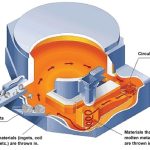
The double-chamber reverberatory furnace is a significant improvement over the single-chamber design. The furnace is divided into a heating chamber and a melting chamber by a suspended baffle. Aluminium circulates between the two chambers via a mechanical pump. The scrap is preheated in the melting chamber and melted by contact with the circulating hot metal, not by direct flame impingement .
The advantages are real:
- Lower oxidation loss (metal not directly exposed to flame)
- Better temperature and composition uniformity
- Heat recovery from flue gas
- Enclosed charging, better working environment
But the double-chamber design does not solve the alloy change problem. It is still a large bath. It is still designed for single-alloy production. If you change alloys frequently, a double-chamber furnace is still the wrong choice.
A Simple Decision Framework
Ask yourself these questions in order:
1. How many tonnes per day do you need?
-
Under 2 tonnes: Crucible furnace
-
2–5 tonnes: Both are viable. Consider alloy changes.
-
Over 5 tonnes: Reverberatory furnace
2. How often do you change alloys?
-
Every day or every few days: Crucible furnace
-
Once a month or less: Reverberatory furnace
-
Never: Reverberatory furnace
3. What is your scrap quality?
-
Clean, sorted, known alloy: Either
-
Mixed, contaminated, variable: Reverberatory furnace (double-chamber preferred)
4. What is your budget and workforce?
-
Limited budget, small team, simple operation: Crucible furnace
-
Higher budget, trained maintenance team: Reverberatory furnace
5. What is your quality requirement?
-
High-purity, low-oxidation, specialty alloys: Crucible furnace
-
General commercial castings: Either
The Hybrid Approach
Many foundries I work with use a hybrid approach. They run a central reverberatory furnace for bulk melting of their primary alloy, and one or two crucible furnaces for specialty or small-batch work. This gives them the efficiency of the reverb for the main production, and the flexibility of the crucible for everything else .
I helped a gravity casting plant in Zhejiang set up this configuration. They ran a 3-tonne reverberatory furnace for their main A356 production, and two 500 kg crucible furnaces for low-volume alloys and prototype work. The capital cost was higher than a single furnace, but the operational flexibility was worth it.
Final Thoughts
Choosing between a crucible furnace and a reverberatory furnace is not about which is better. It is about which fits your production profile.
If you change alloys frequently, melt small batches, or value flexibility above all, choose a crucible furnace.
If you melt large volumes of a single alloy, process mixed scrap, or need high throughput, choose a reverberatory furnace.
If you are somewhere in between, consider a hybrid setup.
In my 25 years, I have seen foundries succeed with both furnace types. The ones that succeed are the ones that matched the furnace to the job — not the ones that bought what looked impressive.
About the Author: Hu Shenyue is a veteran aluminium melting furnace expert with 25 years of hands-on experience in China, Southeast Asia, India, the UK, Europe, and North America. He writes practical, experience-based content on furnace selection, maintenance, and optimisation at SmeltPro.
Internal links: Aluminium Melting Furnace Buying Guide 2026, Furnace Maintenance Checklist, Case Study – How a Chinese Expert Improved Die Casting Furnace Yield in Guangdong.