
Energy is the largest operating cost in secondary aluminium melting. It is also the one most operators ignore until the gas bill arrives. I have spent 25 years walking into foundries that are burning 20–40% more energy than they should, and the reasons are almost always the same: untuned burners, blocked recuperators, leaky door seals, and charging practices that waste heat.
In 2022, I visited a recycling plant in Rayong, Thailand. They were melting 18 tonnes per day of mixed scrap in two gas-fired furnaces. Their specific energy consumption was 1,050 kWh per tonne. The plant manager told me he had tried everything — new burners, new refractory, different flux. Nothing worked. He was ready to buy new furnaces.
I spent four days on site. We did not buy new furnaces. We did not replace the burners. We fixed the system. By the end of the following month, energy consumption had dropped to 819 kWh per tonne — a 22% reduction. The investment was less than $8,000. The annual saving was over $136,000.
This is how we did it.
What “Good” Energy Consumption Looks Like
Before you can reduce energy, you need to know what you are aiming for.
For solid aluminium scrap, the theoretical minimum energy requirement is around 500–575 kWh per tonne . Modern well-optimised furnaces can approach this range. Legacy furnaces often run at 1,000–1,200 kWh per tonne. The gap is 45%.
| Scrap Type | Typical Energy Consumption | Best Achievable |
|---|---|---|
| Solid, heavy scrap | 500–575 kWh/t | 500 kWh/t |
| Light gauge scrap | 600–625 kWh/t | 575 kWh/t |
| Mixed contaminated scrap | 800–1,100 kWh/t | 700 kWh/t |
Light scrap consumes roughly 20% more energy than solid scrap at the upper end . That is physics. Thin material has higher surface area, oxidises faster, and is harder to submerge. But the gap between 600 and 1,050 is not physics. It is practice.
Step 1: Tune the Burner — The Biggest Single Win
The burner is where the energy enters the furnace. A poorly tuned burner wastes 10–20% of the fuel. A well-tuned burner captures that back.
At the Thai plant, the burners were running at 7.8% oxygen in the flue gas. The ideal range for aluminium melting is 2–4% . Too much excess air means you are heating nitrogen instead of aluminium.
I have written about how to optimise burner efficiency in gas-fired aluminium furnaces. The principles are simple: measure, adjust, verify. Use a portable flue gas analyser. Adjust the air damper until O₂ is 2–4% and CO is below 50 ppm. Clean the burner nozzle while you are at it.
At the Thai plant, we tuned both burners from 7.8% to 3.2% oxygen. That single change reduced gas consumption by 12%. No new parts. Just proper adjustment.
Step 2: Clean the Recuperator — The Forgotten Asset
The exhaust gas from an aluminium melting furnace leaves at 800–1,000°C. That heat is money going up the stack. A recuperator captures some of that heat and preheats combustion air. Every 100°C of preheat improves efficiency by about 5%.
Research confirms that exhaust from a typical aluminium melting furnace contains enough waste heat to preheat scrap to 482–538°C and simultaneously preheat combustion air to 427–482°C . That is a significant energy recovery opportunity.
At the Thai plant, the recuperator had not been cleaned in over two years. It was partially blocked with soot and dust. Combustion air preheat was only 170°C. We removed the access panels, cleaned the tubes with a brush and compressed air, and replaced a leaking gasket for $60.
After cleaning, preheat rose to 340°C. That gave us another 6% energy saving.
Step 3: Fix Door Seals and Lining Hot Spots
Every time a furnace door opens, heat escapes. If the seals are worn, heat leaks even when the door is closed.
At the Thai plant, the door seals were original — 7 years old. They were worn flat. We could feel hot air escaping. We replaced them with high-temperature ceramic fibre seals. Cost: $320 per furnace.
We also used a thermal camera to find hot spots on the shell. Two areas were at 175°C. We applied a refractory coating to those zones. Cost: $850 total.
These fixes reduced heat loss by another 3%. They also made the working environment safer.
Step 4: Change Charging Practice — Free Savings
How you charge the furnace affects how much energy you waste.
Pre-dry your scrap. Moisture absorbs heat. Wet scrap can reduce furnace efficiency by 10–25% . At the Thai plant, scrap was stored outdoors and charged wet after rain. We built a covered drying rack. Scrap now dries before charging.
Avoid overcharging. Filling the furnace beyond 80–85% capacity reduces freeboard and increases turbulence. The burner cannot melt efficiently. We reduced the charge from 95% to 80% of capacity. Melt time dropped by 8 minutes per cycle.
Charge into the melt, not onto the surface. Submerged charging reduces oxidation and improves heat transfer. For light scrap, use a charging well or vortex system. Research on submersion techniques identifies vortex charging as effective for light gauge scrap, with impeller speeds below 150 rpm to avoid entraining air .
These changes cost almost nothing. They saved another 3% in energy.
Step 5: Consider Regenerative Burners
If your furnace is due for a burner upgrade, regenerative burners are the next step. They use a pair of burners that alternate between firing and recovering heat from the exhaust. They can preheat combustion air to 900–1,000°C, achieving thermal efficiencies above 80%.
Novelis and Fives recently modernised three aluminium melting furnaces at a German site using regenerative burner technology. The project achieved a 40% reduction in carbon footprint and significant gas savings .
Regenerative burners cost more upfront than recuperative systems. But the payback is often under two years. For furnaces running more than 4,000 hours per year, the economics are compelling.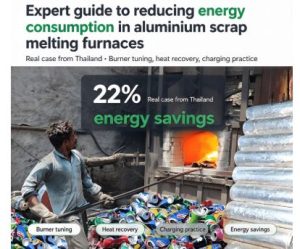
A Real Case from Thailand
In 2022, I worked with a recycling plant in Rayong that was melting 18 tonnes per day of mixed scrap. Their energy consumption was 1,050 kWh per tonne. Here is what we did:
| Action | Investment | Energy Saving |
|---|---|---|
| Burner tuning (7.8% → 3.2% O₂) | $0 | 12% |
| Recuperator cleaning | $60 | 6% |
| Door seal replacement | $640 | 2% |
| Lining hot spot repair | $850 | 1% |
| Covered scrap drying rack | $1,200 | 1% |
| Total | $2,750 | 22% |
Results after one month:
| Metric | Before | After | Improvement |
|---|---|---|---|
| Energy consumption | 1,050 kWh/t | 819 kWh/t | 22% reduction |
| Annual energy cost (18 t/day) | $620,000 | $484,000 | $136,000 saved |
| Payback period | — | — | <1 month |
The plant manager was shocked. He had been told he needed new furnaces. He didn’t. He needed someone to look at the details.
A Simple Checklist to Reduce Energy Consumption
-
Tune the burner. Target O₂ 2–4%, CO below 50 ppm.
-
Clean the recuperator. Check combustion air preheat temperature.
-
Replace worn door seals. Check monthly.
-
Repair refractory hot spots. Use a thermal camera.
-
Pre-dry scrap. Build a covered drying rack.
-
Avoid overcharging. Maximum 80% of capacity.
-
Charge into the melt. Use a charging well for light scrap.
-
Consider regenerative burners for high-usage furnaces.
-
Install a gas flow meter. Track consumption per tonne.
-
Train operators on the relationship between practice and energy use.
When to Call an Expert
You can do much of this work yourself. A flue gas analyser and a thermal camera will tell you most of what you need to know. But sometimes an experienced eye finds things you miss.
The Thai plant had a competent maintenance team. They had kept the furnaces running for years. But they had never been trained on combustion analysis or heat recovery. They did not know what they did not know.
My fee for the four-day audit and commissioning support was $7,500. The annual saving was $136,000. That is an 18x return.
If your energy bills are rising, and you have not tuned your burners in the last six months, call someone. Or buy a flue gas analyser and learn to do it yourself. Either way, do not wait.
Final Thoughts
Reducing energy consumption in aluminium scrap melting furnaces is not about buying a new furnace. It is about tuning what you have, recovering what you lose, and changing the habits that waste heat.
In my 25 years, I have seen this pattern repeat in foundries across the world. The biggest savings are often hiding in plain sight — in the burner, in the flue, in the door seal, in the charging practice.
If you run a recycling plant, start with the burner. Then clean the recuperator. Then fix the leaks. Then train the operators. You will see the difference in your first gas bill.
Internal links: How to Optimize Burner Efficiency in Gas-Fired Aluminium Furnaces, Case Study – How a Chinese Expert Cut Energy Costs by 22% in a Shanghai Foundry, Furnace Maintenance Checklist.