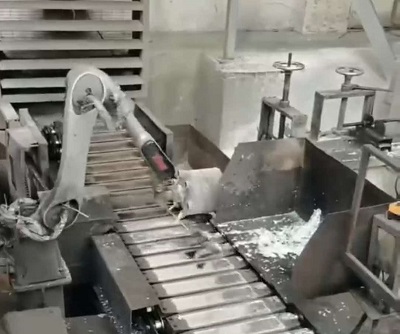
A tower melting furnace is not just a taller version of a reverb furnace. It is a different melting philosophy. The tower uses counter-current heat exchange: scrap descends from the top, hot exhaust gas rises from the bottom, and they meet in the middle. By the time the charge reaches the melting zone, it has already absorbed 60% of the energy required to melt it.
I have spent 25 years working with aluminium melting furnaces in China, Southeast Asia, India, Europe, and North America. In the last five years, I have watched tower furnaces move from a niche European technology to a mainstream choice for high-volume plants in Asia. The reason is simple: energy consumption and metal recovery.
But a tower furnace is not for everyone. It is demanding on feedstock. It is demanding on layout. And it is demanding on maintenance. This article tells you what to look for — and what to avoid.
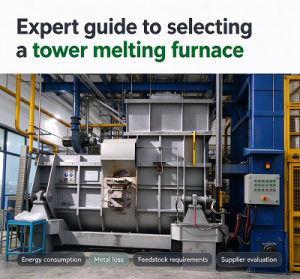
When a Tower Furnace Makes Sense
A tower melting furnace is the right choice when your production reality looks like this:
You have steady, high-volume demand. Tower furnaces are designed for continuous operation. A typical tower furnace runs 24 hours a day, 350 days a year. They do not like stop-start operation. Every shutdown and restart wastes energy and stresses the refractory.
Your feedstock is consistent and prepared. Tower furnaces perform best with clean, sized, and dry scrap. Light gauge material — UBC, thin sheet, shredded scrap — is ideal because the counter-current gas flow can preheat it effectively-5. Heavy, dirty, or wet scrap causes problems.
You have the building height. A tower furnace can be 8–15 metres tall. You need the vertical space. You also need the structural foundation to support the weight.
You are processing thin, light scrap. This is where the tower furnace truly excels. Research on aluminium scrap melting shows that tower furnaces achieve metal recovery rates of 97–99% on thin scrap, compared to 92–95% for twin-chamber and side-well furnaces. On a plant processing 10,000 tonnes per year, a 3% recovery difference is 300 tonnes of metal. At $2,500 per tonne, that is $750,000.
The Specifications That Matter
Energy Consumption
This is the headline number. A well-designed tower furnace can achieve specific energy consumption of 55–65 Nm³ of natural gas per tonne of aluminium melted. Older or poorly maintained furnaces run at 75 Nm³/t or higher.
A Chinese study on a 3.4 t/h tower furnace documented actual performance: energy consumption was 65 Nm³/t before optimisation and 55 Nm³/t after. That is a 15% improvement from proper tuning and heat recovery.
Some Indian manufacturers claim even lower figures. Furnteck advertises tower furnaces with energy consumption below 575 kWh/ton. That is exceptional, but it depends on feedstock and operating conditions.
What to ask the supplier: What is the guaranteed energy consumption for my specific feedstock? What are the conditions of the guarantee?
Metal Loss
Tower furnaces achieve the lowest metal loss of any melting technology. The closed system and preheating reduce oxidation dramatically.
A Chinese case study documented comprehensive metal loss dropping from 1.7% to 1.3% after optimisation. Some suppliers claim losses as low as 1.0–1.5% for clean scrap.
Compare that to a conventional reverb furnace, which loses 3–5% of the charge to oxidation.
What to ask the supplier: What metal loss can you guarantee for my scrap type? Can you provide reference data from a similar plant?
Melting Capacity
Tower furnaces are available in a wide range of capacities. Small units start at 100 kg/h. Large central melting systems reach 4 tonnes per hour or more.
For high-volume production, the typical range is 1–4 tonnes per hour. Sanken Sangyo, a Japanese manufacturer, offers a hybrid tower melter with capacities from 100 kg/h to 600 kg/h. Larger Chinese and European manufacturers offer systems up to 4 t/h.
What to look for: Capacity must match your downstream demand. A furnace that is too large wastes energy at partial load. A furnace that is too small creates bottlenecks.
Feedstock Requirements
This is where most tower furnace projects fail. The furnace is not a garbage disposal. It requires prepared feedstock.
| Feedstock Property | Requirement | Consequence of Poor Quality |
|---|---|---|
| Moisture | Dry (<0.5%) | Steam explosions, system alarms, reduced efficiency |
| Oil and coatings | Low | Preheating zone coking, gas channel blockage |
| Size | Consistent, 50–300 mm | Bridging, poor gas flow, uneven melting |
| Fines content | Low | Dust carryover, increased emissions load |
| Contamination | Sorted | Alloy cross-contamination, dross increase |
A three-year user review of a Chinese tower furnace installation was blunt about this: “The tower furnace is like a princess. If the material is wet, it smothers. If it has too much oil, the preheating zone cokes up. If the size is wrong, it bridges.”
What to look for: Does the supplier offer feedstock preparation recommendations? Can they provide a reference plant processing similar scrap?
Refractory and Maintenance Access
The tower furnace refractory is subjected to severe thermal cycling. The melting zone operates at 750–850°C. The preheating zone sees fluctuating temperatures as charge descends.
Chinese manufacturers now offer tower furnaces with imported anti-wetting castables and refractory life of 5 years or more. But even the best refractory needs maintenance.
The problem is access. The melting tower is several metres tall. Internal inspection and repair require shutdown, cooling, and confined space entry. One user described a mid-life repair as taking “half a month of production downtime”.
What to look for: Does the design allow easy access to the melting zone? Are there inspection ports at multiple levels? What is the expected refractory life?
Comparing Tower Furnaces to Other High-Volume Options
| Feature | Tower Furnace | Twin-Chamber | Side-Well |
|---|---|---|---|
| Energy consumption | 55–65 Nm³/t | 70–85 Nm³/t | 80–100 Nm³/t |
| Metal recovery | 97–99% | 92–95% | 92–95% |
| Best feedstock | Thin, light, clean | Mixed, oily | Heavy, clean |
| Moisture tolerance | Very low | Moderate | Low |
| Building height required | 8–15 m | 3–5 m | 3–4 m |
| Startup time | 12–24 hours | 2–4 hours | 2–4 hours |
| Automation potential | Very high | Moderate | Moderate |
The tower furnace wins on energy and recovery. It loses on feedstock flexibility and startup time.
A Real Case from Zhejiang
In 2022, a recycling plant in Zhejiang commissioned a domestically produced tower furnace for processing 6063 extrusion scrap and machining chips. The project was a learning experience.
The good news: after commissioning, the furnace achieved 2.5–3.5% metal loss on clean, sorted chips and 55–65 Nm³/t energy consumption. Compared to their previous reverb furnace, they recovered an additional 700 tonnes of aluminium per year on 10,000 tonnes of throughput. At market prices, that was over 10 million yuan in additional profit.
The bad news: the first year was difficult. Wet scrap caused repeated system alarms. Oily chips coked the preheating zone. Oversized pieces bridged the feed chute. Each problem required shutdown and manual intervention.
The solution was upstream investment. The plant installed a shredder, a dryer, and a magnetic separator. They also implemented stricter incoming scrap inspection. Once the feedstock was controlled, the furnace performed as designed.
The plant manager’s verdict after three years: “The tower furnace is not a machine. It is a system. If you buy the furnace but don’t invest in feedstock preparation, you will fail.”
A Simple Selection Checklist
-
Confirm building height. Minimum 8 metres, preferably 12–15 metres.
-
Confirm feedstock quality. Thin, clean, dry, sized. If not, budget for preparation equipment.
-
Ask for guaranteed energy consumption. Target 55–65 Nm³/t for natural gas.
-
Ask for guaranteed metal recovery. Target 97%+ for clean thin scrap.
-
Check refractory life. Minimum 5 years for melting zone.
-
Check maintenance access. Inspection ports at multiple levels. Confined space entry plan.
-
Evaluate automation level. Automatic charging, temperature control, tapping.
-
Visit a reference plant. Processing similar feedstock. At least 2 years in operation.
-
Ask about feedstock preparation. Does the supplier understand the upstream requirements?
-
Get the performance guarantee in writing.
When to Call an Expert
A tower furnace is a major capital investment. The selection process is not a DIY project. You need to understand your feedstock, your layout, your utilities, and your downstream demand.
If you are considering a tower furnace, bring in someone who has seen them operate. The cost of a consultant is small compared to the cost of a furnace that cannot process your scrap.
Final Thoughts
A tower melting furnace is the most energy-efficient and highest-recovery technology for high-volume aluminium melting. But it is not a universal solution. It demands consistent feedstock, tall buildings, and disciplined operation.
In my 25 years, I have seen plants succeed with tower furnaces and plants fail. The difference is always feedstock preparation and realistic expectations. If you have the right feedstock and the right building, a tower furnace will pay for itself in energy savings and metal recovery. If you don’t, it will be an expensive lesson.
About the Author: Hu Shenyue is a veteran aluminium melting furnace expert with 25 years of hands-on experience in China, Southeast Asia, India, the UK, Europe, and North America. He writes practical, experience-based content on furnace selection, maintenance, and optimisation at SmeltPro.
Internal links: How to Choose a Secondary Aluminium Melting Furnace for Ingot Production, How to Improve Metal Recovery in Aluminium Scrap Melting, How to Optimize Tower Furnace Preheating for Better Melt Rate, How to Reduce Energy Consumption in Aluminium Scrap Melting Furnaces, How to Evaluate the Reliability of Chinese Aluminium Furnace Manufacturers.