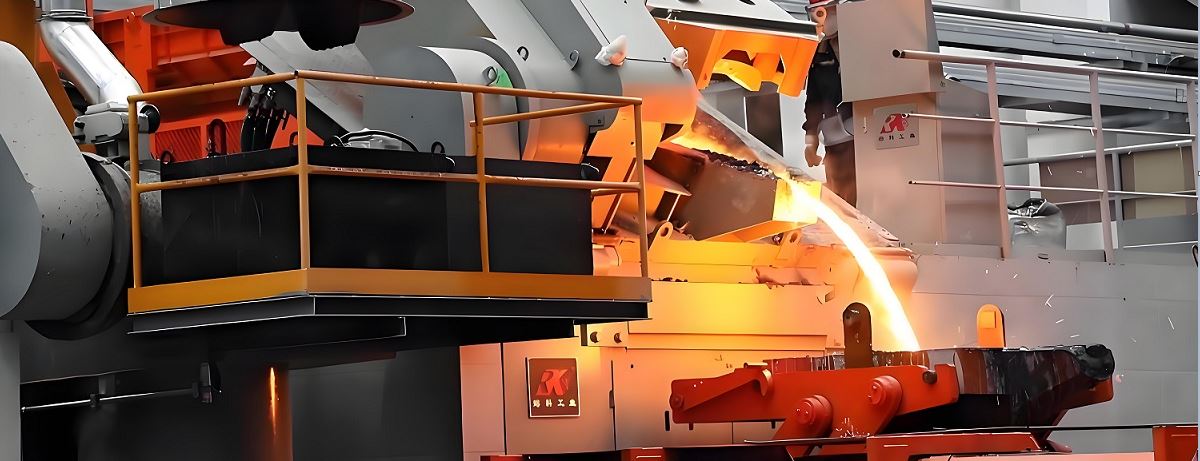
holding furnace is the heart of your die casting line. It receives molten metal from the melting furnace, maintains it at the correct temperature, and delivers it to the shot sleeve — shot after shot, shift after shift. If the holding furnace is wrong, nothing else matters. The die can be perfect. The machine can be new. The alloy can be certified. But if the metal arrives at the wrong temperature, with the wrong chemistry, or at the wrong rate, you will produce scrap.
I have spent 25 years working with aluminium die casting furnaces in China, Southeast Asia, India, Europe, and North America. I have helped foundries select holding furnaces for applications ranging from small jobbing shops to gigacasting plants producing EV structural parts. The selection process is always the same. You define the requirement first. Then you match the furnace to it.
This article walks through that process.
Start with the Die Casting Machine
The holding furnace must match the die casting machine. Not the other way around.
The key parameters are:
| Machine Parameter | What It Tells You |
|---|---|
| Shot weight | Minimum and maximum dosing capacity |
| Cycle time | Required metal delivery rate |
| Number of shifts | Daily production hours |
| Alloy type | Temperature range and chemistry control |
| Part type | Quality requirement (commercial vs structural) |
A small 400-tonne machine running 2 kg shots needs a different holding furnace than a 2,500-tonne machine running 15 kg shots. A machine producing commercial parts needs less temperature stability than one producing EV structural parts.
I have written about what to look for in a die casting furnace with dosing system. The same principles apply to holding furnace selection.
Capacity: Match to Production, Not to Future Dreams
Holding furnace capacity should be sized to hold 1.5 to 2 hours of production. That gives you a buffer for melting furnace delays without holding metal too long.
| Production Rate | Recommended Holding Capacity |
|---|---|
| 500 kg/day | 100–150 kg |
| 2 tonnes/day | 300–500 kg |
| 5 tonnes/day | 800–1,200 kg |
| 10 tonnes/day | 1,500–2,500 kg |
| 20 tonnes/day | 3,000–5,000 kg |
Do not oversize the holding furnace. A furnace that is too large holds metal too long. Metal held too long absorbs hydrogen. It oxidises. It loses temperature. The result is inconsistent quality.
Do not undersize it either. A furnace that is too small runs out of metal during peak production. The operator has to wait for the melting furnace. Production stops.
I once visited a foundry in Guangdong that had a 2-tonne holding furnace on a line producing 3 tonnes per day. The furnace was too large. Metal was held for 4–6 hours. Hydrogen content was 0.28 ml/100g. Porosity was rampant. We replaced it with a 1-tonne furnace. Holding time dropped to 2 hours. Hydrogen dropped to 0.14 ml/100g. The porosity disappeared.
Temperature Stability: ±3°C or Better
Temperature stability is the single most important specification. A furnace that swings ±15°C produces inconsistent castings. A furnace that holds ±3°C produces consistent castings.
What to look for:
| Feature | Specification | Why It Matters |
|---|---|---|
| Temperature stability | ±3°C or better | Consistent shot weight and fill |
| Heating system | Electric resistance or induction | Precise control |
| Thermocouples | Minimum 2, positioned in bath and near discharge | Accurate temperature representation |
| Control system | PID with auto-tune | Prevents cycling |
| Insulation | Ceramic fibre or equivalent | Reduces heat loss |
I have written about how to achieve consistent melt temperature in a holding furnace. The principles are the same.
Dosing System: Manual vs Automatic
The dosing system determines how metal gets from the holding furnace to the shot sleeve.
| Dosing Type | Accuracy | Labour | Best For |
|---|---|---|---|
| Manual ladle | ±4–5% | High | Small jobbing shops |
| Automatic ladle | ±2–3% | Medium | General commercial casting |
| Electric dosing furnace | ±1% | Low | Structural parts, EV castings |
For structural parts and EV castings, an electric dosing furnace is the standard. The accuracy is better. The cycle time is faster. The data logging is built in.
For general commercial casting, an automatic ladle on a holding furnace may be sufficient. The cost is lower. The accuracy is adequate.
I have written about how to reduce gas porosity in die casting aluminium melts. Dosing accuracy is part of that solution.
Metal Level Control
Consistent metal level in the holding furnace means consistent head pressure. Consistent head pressure means consistent shot weight.
What to look for:
| Feature | Specification | Why It Matters |
|---|---|---|
| Metal level control | ±5 mm | Consistent head pressure |
| Level sensor | Laser or ultrasonic | Non-contact, reliable |
| Automatic feeding | From central melter or ingot feeder | Reduces operator intervention |
| Low level alarm | Audible and visual | Prevents running dry |
Vacuum Compatibility
For EV structural parts and leak-tight castings, the holding furnace must be compatible with vacuum-assisted die casting. The furnace must deliver metal to the shot sleeve without introducing air or gas.
What to look for:
| Feature | Specification | Why It Matters |
|---|---|---|
| Vacuum-compatible transfer | Sealed launder or direct connection | Prevents air entrapment |
| Transfer time | Under 30 seconds | Minimises temperature loss |
| Transfer temperature loss | Under 15°C | Maintains shot sleeve temperature |
| Atmosphere control | Inert gas blanket option | Reduces oxidation |
I have written about how die casting furnace technology is evolving for electric vehicle manufacturing. Vacuum compatibility is becoming mandatory for structural parts.
Heating System: Electric vs Gas
Most holding furnaces are electric. Electric resistance or induction heating provides precise temperature control and no combustion emissions.
| Heating Type | Temperature Stability | Energy Cost | Maintenance |
|---|---|---|---|
| Electric resistance | ±3°C | Higher per kWh | Heating element replacement |
| Induction | ±2°C | Higher per kWh | Coil and cooling system |
| Gas-fired | ±10–15°C | Lower per kWh | Burner and refractory |
For structural parts, electric is the standard. For general commercial casting, gas may be acceptable if temperature stability is not critical.
Control System and Data Logging
A modern holding furnace must have PLC-based control with data logging. The data is needed for traceability and process optimisation.
What to look for:
| Feature | Specification | Why It Matters |
|---|---|---|
| PLC control | Siemens, Allen-Bradley, or equivalent | Reliable, spare parts available |
| HMI | Touchscreen, multi-language | Operator friendly |
| Data logging | Shot weight, temperature, cycle time | Traceability |
| OPC UA connectivity | For MES integration | Data transfer |
| Recipe management | Alloy-specific settings | Quick changeover |
A Real Case from Thailand
In 2024, a die casting plant in Rayong, Thailand, was selecting a holding furnace for EV motor housings. They had three quotes.
The European system: $185,000. Temperature stability: ±2°C. Dosing accuracy: ±0.8%. Local service: yes.
The Japanese system: $165,000. Temperature stability: ±3°C. Dosing accuracy: ±1.0%. Local service: yes.
The Chinese system: $98,000. Temperature stability: ±3°C. Dosing accuracy: ±1.0%. Local service: one engineer in Bangkok.
The plant manager visited the Chinese supplier’s reference site in Vietnam. The furnace was running EV structural parts. The temperature stability was ±3.2°C. The dosing accuracy was ±1.1%. The rejection rate was 1.9%. The supplier had a service engineer on site during commissioning.
They chose the Chinese system. Six months later, the rejection rate was 1.8%. The payback period was 14 months.
That is the reality of holding furnace selection today. The equipment matters. The supplier matters more.
A Simple Selection Checklist
- Define shot weight, cycle time, and production rate.
- Size the holding furnace for 1.5–2 hours of production.
- Specify temperature stability: ±3°C or better.
- Specify dosing accuracy: ±1% for structural, ±2% for commercial.
- Require metal level control: ±5 mm.
- Require vacuum compatibility for structural parts.
- Specify heating system: electric for precision, gas for general.
- Require PLC data logging with OPC UA connectivity.
- Evaluate supplier: reference site, local service, spare parts.
- Get the performance guarantee in writing.
When to Call an Expert
You can select a holding furnace yourself. But sometimes an experienced eye sees what you miss. The Thai plant had a competent team. They had run die casting machines for years. But they had never selected a holding furnace for EV structural parts.
My fee for the three-day audit and selection support was $8,500. The annual saving was over $100,000. That is a 12x return.
If you are buying a holding furnace, call someone. Or use the checklists on this blog. Either way, do not guess.
Final Thoughts
Selecting a holding furnace for your die casting line is not about buying the biggest or the cheapest. It is about matching the furnace to your machine, your alloy, and your quality requirement.
In my 25 years, I have seen plants transform their quality by selecting the right holding furnace. The die did not change. The alloy did not change. The metal delivery did.
If you run a die casting plant, start by measuring your shot weight variation and temperature stability. If either is out of specification, fix it. You will see the difference in your rejection rate.
About the Author: Hu Shenyue is a veteran aluminium melting furnace expert with 25 years of hands-on experience in China, Southeast Asia, India, the UK, Europe, and North America. He writes practical, experience-based content on furnace selection, maintenance, and optimisation at SmeltPro.
Internal links: What to Look for in a Die Casting Furnace with Dosing System, How to Achieve Consistent Melt Temperature in a Holding Furnace, How to Optimize Die Casting Furnace Temperature for A380 and ADC12 Alloys, How to Reduce Gas Porosity in Die Casting Aluminium Melts, How Die Casting Furnace Technology Is Evolving for Electric Vehicle Manufacturing.