

SmeltPro | Aluminium Melting Furnace Insights by Hu Shenyue

How to Reduce Energy Consumption in Aluminum Scrap Melting Furnaces

Energy is the largest operating cost in secondary aluminium melting. It is also the one most operators ignore until the

Learn More

SmeltPro | Aluminium Melting Furnace Insights by Hu Shenyue

How to Improve Metal Recovery in Aluminum Scrap Melting

Metal recovery in aluminium scrap melting is not one number. It is the result of everything you do — or

Learn More

SmeltPro | Aluminium Melting Furnace Insights by Hu Shenyue

How to Optimize Aluminum Scrap Melting Furnace Charging for Different Scrap Types

Charging is the first thing you do with scrap. It is also the first place you lose metal. I have

Learn More

SmeltPro | Aluminium Melting Furnace Insights by Hu Shenyue

How to Achieve Consistent Melt Temperature in a Holding Furnace

Consistent melt temperature in a holding furnace comes down to three things: correct thermocouple placement, proper heating zone control, and

Learn More

SmeltPro | Aluminium Melting Furnace Insights by Hu Shenyue

How to Achieve Aerospace-Grade Aluminum Melt Cleanliness

Aerospace-grade aluminium is not just cleaner than commercial-grade. It is a different class of material. The hydrogen content must be

Learn More

About Me

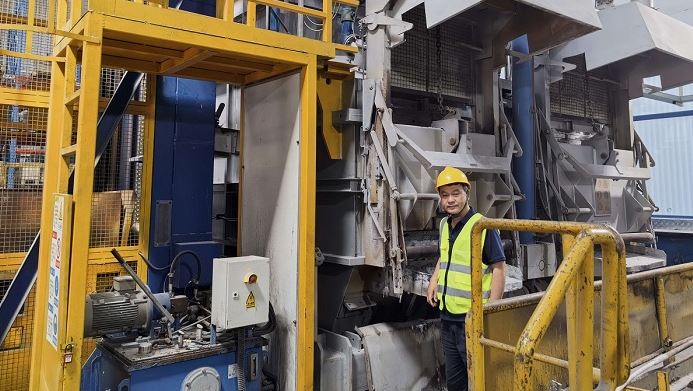
I’m Hu Shenyue. In the industry, people call me “The Furnace Whisperer” — not because I talk to machines, but because after 25 years, I’ve learned to listen to what they tell me.

My career began in the early 2000s, as a maintenance technician in a Chinese foundry. I was in my twenties, with a toolbox and a lot of questions. That’s where I learned the most important lesson: furnaces don’t fail without warning. They give you signs. You just have to know where to look.

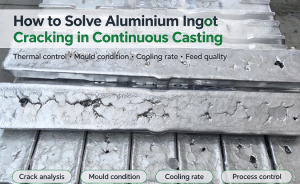
How to Solve Aluminum Ingot Cracking Problems in Continuous Casting

How to Solve Aluminum Ingot Cracking Problems in Continuous Casting

Cracking in continuous cast aluminium ingots is not a cosmetic defect. It is a structural failure. A cracked ingot cannot be sold. It must be remelted, which costs energy, labour, and metal. If the crack is internal, it may not be visible until the customer machines the ingot. That is worse — it damages your reputation. I have spent 25 years troubleshooting aluminium casting problems in China, Southeast Asia, India, Europe, and North America. Cracking in continuous casting is one...
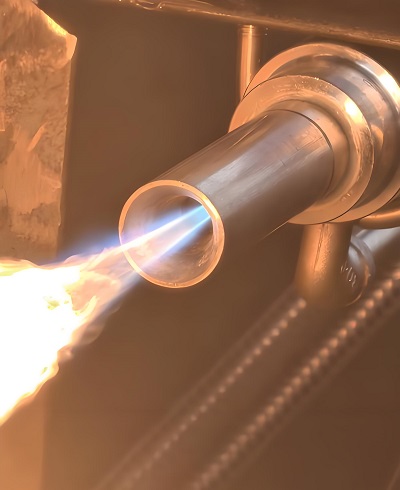
Why Is My Aerospace Aluminum Melt Failing Cleanliness Tests

Why Is My Aerospace Aluminum Melt Failing Cleanliness Tests

You have run the test. The result is above the limit. The customer is asking questions. The production manager is asking for answers. And everyone is looking at the furnace. The furnace is probably not the problem. I have spent 25 years troubleshooting aluminium melt cleanliness failures for aerospace applications. I have seen hydrogen failures, inclusion failures, and failures that turned out to be measurement errors. The pattern is always the same: the furnace is blamed first, but the root...
How to Choose an Aerospace Aluminum Melting Furnace – A Buyer’s Guide

How to Choose an Aerospace Aluminum Melting Furnace – A Buyer’s Guide

Choosing an aerospace aluminium melting furnace is not like choosing a commercial furnace. The requirements are different. The tolerances are tighter. The consequences of failure are higher. And the certification burden is heavier. I have spent 25 years working with aluminium melting furnaces in China, Southeast Asia, India, the UK, Europe, and North America. In the last five years, I have helped three foundries achieve aerospace-grade melting capability. Each one started with the same mistake: they thought a commercial furnace...
How to Select a Holding Furnace for Your Die Casting Line

How to Select a Holding Furnace for Your Die Casting Line

 holding furnace is the heart of your die casting line. It receives molten metal from the melting furnace, maintains it at the correct temperature, and delivers it to the shot sleeve — shot after shot, shift after shift. If the holding furnace is wrong, nothing else matters. The die can be perfect. The machine can be new. The alloy can be certified. But if the metal arrives at the wrong temperature, with the wrong chemistry, or at the wrong rate,...
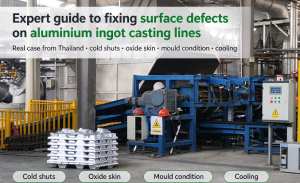
Why Is My Aluminum Ingot Casting Line Producing Surface Defects

Why Is My Aluminum Ingot Casting Line Producing Surface Defects

Surface defects on aluminium ingots are not just cosmetic. They are a signal that something in your casting line is out of control. Cold shuts mean the metal is too cold. Oxide skin means the metal is exposed to air too long. Surface porosity means hydrogen is too high. Cracks mean the cooling is too fast or too uneven. I have spent 25 years troubleshooting aluminium ingot casting lines in China, Southeast Asia, India, Europe, and North America. Surface defects...
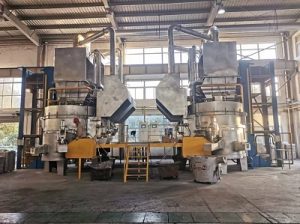
How to Select a Side-Well Furnace with 3-Ton/Hour Scrap Melting Rate

How to Select a Side-Well Furnace with 3-Ton/Hour Scrap Melting Rate

Most side-well furnace articles tell you the same thing: high efficiency, low burn loss, excellent for thin scrap. That is true. But they leave out the part that actually matters when you are standing in front of a purchase order with a supplier who promises 3 tonnes per hour and a plant manager who needs it to work. I have spent 25 years commissioning and troubleshooting aluminium melting furnaces. In 2023, I helped a recycling plant in Zhejiang select and...
Case Study: QDW Tilting Central Melting Furnace Powers Automotive Structural Component Production at an Australian Die-Casting Plant

Case Study: QDW Tilting Central Melting Furnace Powers Automotive Structural Component Production at an Australian Die-Casting Plant

By Manager Ding | Sales Manager, Juding Thermal Energy Technology Background In late 2022, I received an inquiry from a die-casting plant in Australia. The plant specializes in automotive structural components—parts that demand exceptional mechanical properties, minimal porosity, and absolute consistency. Their engineering manager, Mr. Walker, was direct from the start: "We're not looking for a cheap furnace. We're looking for a furnace that can deliver high-quality aluminum, hour after hour, without fail. If the melt quality drops, our parts fail. It's...
How to Choose Between Crucible and Reverberatory Furnaces for Aluminum Melting

How to Choose Between Crucible and Reverberatory Furnaces for Aluminum Melting

The choice between a crucible furnace and a reverberatory furnace is not about which one is “better.” It is about which one fits your production reality. I have spent 25 years watching foundries make this decision — and more often than not, they make it based on price alone. That is a mistake. In 2022, I visited a jobbing foundry in Foshan, Guangdong. The owner had bought a 2-tonne reverberatory furnace three years earlier because it looked like what the...
Case Study: QDW Tilting Furnace Installation and Sintering Success at a Vietnamese Die-Casting Plant

Case Study: QDW Tilting Furnace Installation and Sintering Success at a Vietnamese Die-Casting Plant

By Manager Ding | Sales Manager, Juding Thermal Energy Technology Background In early 2022, I received an inquiry from a die-casting plant in Vietnam. The plant manager, Mr. Nguyen, had a problem that many die-casters know too well: inconsistent aluminum quality was causing high scrap rates, and their existing furnace could not keep up with production demand. The plant runs two 1,600-ton die-casting machines producing automotive components for export. Their customers demanded high-quality parts with minimal porosity and consistent mechanical properties. But...
Case Study: How a QDW Tilting Furnace Improved Safety and Efficiency at a Guangdong Die-Casting Plant

Case Study: How a QDW Tilting Furnace Improved Safety and Efficiency at a Guangdong Die-Casting Plant

By Manager Ding | Sales Manager, Juding Thermal Energy Technology Background In May 2021, I received an inquiry from a die-casting plant in Guangdong Province. The plant manager, Mr. Chen, had a clear problem: their existing melting operation was inefficient, unsafe, and unable to keep up with production. They were running three 2,200-ton L.K. die-casting machines in a single workshop. Their current setup relied on manual ladling from a fixed furnace—a method that was not only slow but also dangerous. Workers had...
微信扫码

WhatsApp: 13871207937