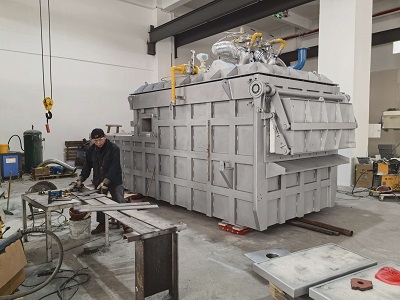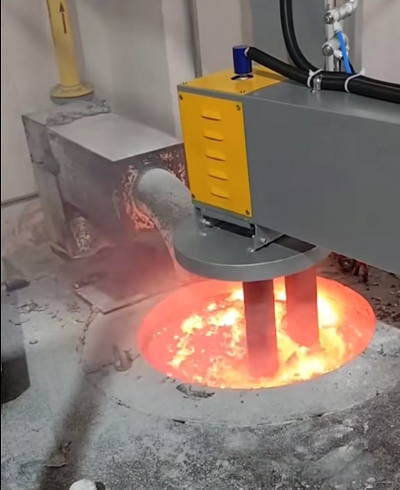
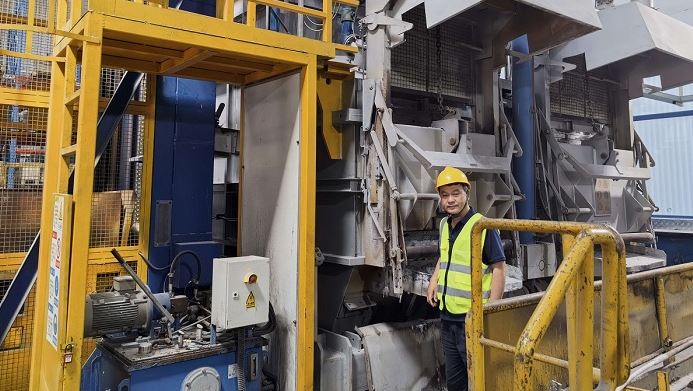
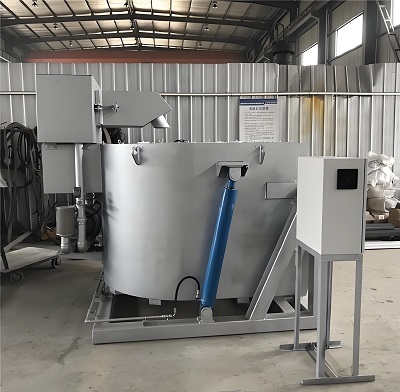



SmeltPro | Aluminium Melting Furnace Insights by Hu Shenyue

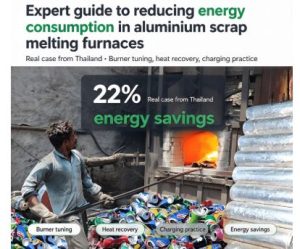
How to Reduce Energy Consumption in Aluminum Scrap Melting Furnaces

Energy is the largest operating cost in secondary aluminium melting. It is also the one most operators ignore until the

Learn More

SmeltPro | Aluminium Melting Furnace Insights by Hu Shenyue

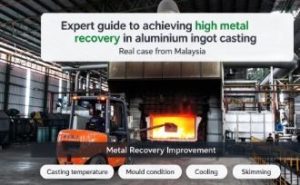
How to Improve Metal Recovery in Aluminum Scrap Melting

Metal recovery in aluminium scrap melting is not one number. It is the result of everything you do — or

Learn More

SmeltPro | Aluminium Melting Furnace Insights by Hu Shenyue

How to Optimize Aluminum Scrap Melting Furnace Charging for Different Scrap Types

Charging is the first thing you do with scrap. It is also the first place you lose metal. I have

Learn More

SmeltPro | Aluminium Melting Furnace Insights by Hu Shenyue

How to Achieve Consistent Melt Temperature in a Holding Furnace

Consistent melt temperature in a holding furnace comes down to three things: correct thermocouple placement, proper heating zone control, and

Learn More

SmeltPro | Aluminium Melting Furnace Insights by Hu Shenyue

How to Achieve Aerospace-Grade Aluminum Melt Cleanliness

Aerospace-grade aluminium is not just cleaner than commercial-grade. It is a different class of material. The hydrogen content must be

Learn More

About Me

I’m Hu Shenyue. In the industry, people call me “The Furnace Whisperer” — not because I talk to machines, but because after 25 years, I’ve learned to listen to what they tell me.

My career began in the early 2000s, as a maintenance technician in a Chinese foundry. I was in my twenties, with a toolbox and a lot of questions. That’s where I learned the most important lesson: furnaces don’t fail without warning. They give you signs. You just have to know where to look.

Case Study – Improving Metal Recovery at a Guangdong Aluminum Recycling Plant

Case Study – Improving Metal Recovery at a Guangdong Aluminum Recycling Plant

In early 2024, I received a call from a recycling plant manager in Guangdong Province. His plant processes mixed aluminium scrap into ADC12 ingots for the automotive and appliance markets. His metal recovery rate had fallen to 84%. That meant 16% of every tonne of scrap was going to dross, salt slag, or oxidation loss. With 25 tonnes per day of throughput, he was losing 4 tonnes of metal every day. At $2,500 per tonne, that was $10,000 per day —...
How to Evaluate the Reliability of Chinese Aluminum Furnace Manufacturers

How to Evaluate the Reliability of Chinese Aluminum Furnace Manufacturers

Evaluating a Chinese aluminium furnace manufacturer comes down to six things: the factory, the reference list, the service network, the spare parts chain, the certifications, and the financial stability. Price is not on that list. Price is what you compare after you know the supplier is reliable. Not before. I have spent 25 years working with aluminium melting furnaces in China, Southeast Asia, India, the UK, Europe, and North America. I have helped buyers avoid bad suppliers and helped good...
How to Reduce Gas Porosity in Die Casting Aluminum Melts

How to Reduce Gas Porosity in Die Casting Aluminum Melts

Gas porosity is the most common internal defect in aluminium die casting. It shows up as round, smooth cavities on X-ray. It causes leaks in structural parts. It ruins machined surfaces. And it costs foundries millions in scrap every year. In my 25 years, I have traced gas porosity to two sources: hydrogen dissolved in the melt and air entrapped during filling. They look similar on a radiograph. They have different causes and different fixes. Here is how I reduce both. [caption id="attachment_101"...
How to Optimize Die Casting Furnace Temperature for A380 and ADC12 Alloys

How to Optimize Die Casting Furnace Temperature for A380 and ADC12 Alloys

A380 and ADC12 are the two most common aluminium die casting alloys in the world. They look similar on a spec sheet. They behave differently in a furnace. If you run both alloys on the same line — as many foundries do — you need to understand the temperature gap between them. I have spent 25 years setting up and troubleshooting die casting furnaces. The number one cause of inconsistent casting quality I see is wrong furnace temperature. Not the...
How to Improve Heat Transfer Efficiency in a Rotary Furnace

How to Improve Heat Transfer Efficiency in a Rotary Furnace

Rotary furnaces are the workhorses of aluminium recycling. They handle contaminated scrap, dross, and low-grade material that other furnaces cannot process economically. But they are also energy-intensive. In my 25 years, I have seen rotary furnaces consuming 900–1,200 kWh per tonne when they should be running at 600–750 kWh per tonne. The difference is not the furnace. It is the heat transfer. Radiation, convection, and direct contact between the hot refractory and the charge all matter. When one of them...
How to Set Up a Preventive Maintenance Schedule for Aluminium Furnaces

How to Set Up a Preventive Maintenance Schedule for Aluminium Furnaces

A preventive maintenance schedule is not a document you file away. It is a habit you build. In my 25 years, I have seen foundries with 20-year-old furnaces that run like new, and foundries with 5-year-old furnaces that break down every month. The difference is never the equipment. It is the discipline of maintenance. Setting up a schedule is not complicated. It does not require fancy software. It requires a pen, a clipboard, and the commitment to follow through. Here...
Case Study – Reducing Die Casting Porosity at a Guangdong Automotive Foundry

Case Study – Reducing Die Casting Porosity at a Guangdong Automotive Foundry

In early 2024, I received a call from a foundry manager in Guangdong Province. His plant supplies aluminium die castings to several automotive OEMs in China and Southeast Asia. Their main product is a structural component for electric vehicles — a motor housing that must pass leak testing at 0.5 bar. Their porosity rejection rate had risen to 12%. The customer had issued a warning: improve within three months, or lose the contract. The foundry had tried changing the die,...
Case Study – How a Chinese Expert Optimized Die Casting Furnace for EV Part Production

Case Study – How a Chinese Expert Optimized Die Casting Furnace for EV Part Production

In late 2023, I was contacted by a die casting plant in Rayong, Thailand. They supply structural components for electric vehicles — battery trays, motor housings, and front shock towers. Their main customer is a Chinese OEM that has invested heavily in EV production in Southeast Asia. The plant had recently installed a 2,500-tonne vacuum-assisted die casting machine. The machine was ready. The furnace was not. The plant manager told me: “Our leak test rejection rate is 9%. We cannot...
Case Study – Solving a Refractory Failure in a Southeast Asian Foundry

Case Study – Solving a Refractory Failure in a Southeast Asian Foundry

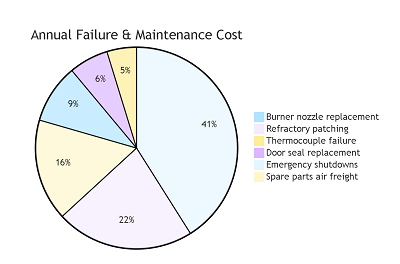
In mid-2023, I received a call from a foundry manager in Malaysia. His voice was tense. “Our 3-tonne gas-fired reverb furnace is failing. The lining cracked after only 14 months. We have patches everywhere. The shell is getting hot. We need help before it fails completely.” Fourteen months is nothing for a refractory lining. A well-installed and properly operated lining should last 5–8 years in an aluminium melting furnace. Something was wrong. Not with the refractory material itself. With everything...
Case Study – How We Cut Energy Costs by 20% for a Chinese Foundry

Case Study – How We Cut Energy Costs by 20% for a Chinese Foundry

In early 2023, a mid-sized foundry in Jiangsu Province contacted me. They run two gas-fired reverberatory furnaces, each with a 5-tonne capacity. They melt around 25 tonnes per day of ADC12 and A380 for automotive and industrial castings. Their energy bill had risen 28% in two years. The plant manager told me, “We cannot pass these costs to our customers. We need to cut energy, but we cannot afford new furnaces.” I spent four days on site. We made no...
微信扫码

WhatsApp: 13871207937