


SmeltPro | Aluminium Melting Furnace Insights by Hu Shenyue

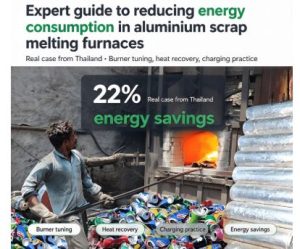
How to Reduce Energy Consumption in Aluminum Scrap Melting Furnaces

Energy is the largest operating cost in secondary aluminium melting. It is also the one most operators ignore until the

Learn More

SmeltPro | Aluminium Melting Furnace Insights by Hu Shenyue

How to Improve Metal Recovery in Aluminum Scrap Melting

Metal recovery in aluminium scrap melting is not one number. It is the result of everything you do — or

Learn More

SmeltPro | Aluminium Melting Furnace Insights by Hu Shenyue

How to Optimize Aluminum Scrap Melting Furnace Charging for Different Scrap Types

Charging is the first thing you do with scrap. It is also the first place you lose metal. I have

Learn More

SmeltPro | Aluminium Melting Furnace Insights by Hu Shenyue

How to Achieve Consistent Melt Temperature in a Holding Furnace

Consistent melt temperature in a holding furnace comes down to three things: correct thermocouple placement, proper heating zone control, and

Learn More

SmeltPro | Aluminium Melting Furnace Insights by Hu Shenyue

How to Achieve Aerospace-Grade Aluminum Melt Cleanliness

Aerospace-grade aluminium is not just cleaner than commercial-grade. It is a different class of material. The hydrogen content must be

Learn More

About Me

I’m Hu Shenyue. In the industry, people call me “The Furnace Whisperer” — not because I talk to machines, but because after 25 years, I’ve learned to listen to what they tell me.

My career began in the early 2000s, as a maintenance technician in a Chinese foundry. I was in my twenties, with a toolbox and a lot of questions. That’s where I learned the most important lesson: furnaces don’t fail without warning. They give you signs. You just have to know where to look.

How to Reduce Metal Loss in Secondary Aluminum Melting for Ingot Production

How to Reduce Metal Loss in Secondary Aluminum Melting for Ingot Production

Metal loss in secondary aluminium melting is not a single problem. It is a chain of losses — oxidation at the melt surface, metal trapped in dross, salt slag carryover, and furnace atmosphere reactions. Each link in the chain has a different cause and a different fix. In my 25 years, I have seen secondary aluminium plants lose anywhere from 2% to 18% of their metal input. The difference is not the furnace. It is the process. A well-run 9.5-tonne...
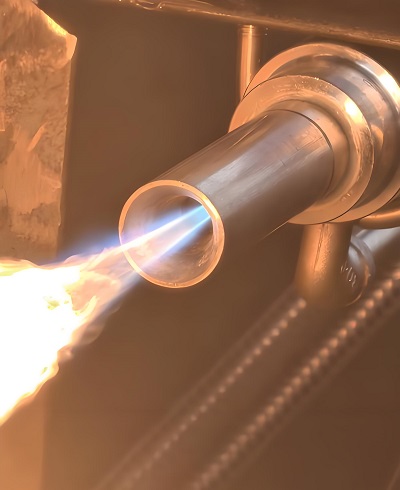
How to Choose an Energy-Efficient Aluminum Melting Furnace

How to Choose an Energy-Efficient Aluminum Melting Furnace

Choosing an energy-efficient aluminium melting furnace comes down to four things: specific energy consumption, furnace type, heat recovery, and control system. Get these right, and you cut your energy bill by 20–40%. Get them wrong, and you pay for it every day for the next 15 years. I have spent 25 years selecting, installing, and troubleshooting aluminium melting furnaces in China, Southeast Asia, India, the UK, Europe, and North America. In the last three years, energy efficiency has moved from...
Case Study – How a Chinese Expert Helped a European Recycler Reduce Melt Loss

Case Study – How a Chinese Expert Helped a European Recycler Reduce Melt Loss

How a Chinese expert helped a European aluminium recycler cut melt loss from 9.2% to 4.6%. Temperature, salt flux, skimming, burner tuning, and training. In late 2023, I received an email from a recycling plant manager in northern Spain. His company processes mixed aluminium scrap into ADC12 ingots for European die casters. His melt loss had risen to 9.2%. That meant 9.2% of every tonne of scrap was going to dross, salt slag, or oxidation. With 8,000 tonnes per year of...
Why Is My Die Casting Furnace Not Maintaining Setpoint Temperature

Why Is My Die Casting Furnace Not Maintaining Setpoint Temperature

A die casting furnace that will not hold setpoint temperature is a serious problem. It affects casting quality, cycle time, and scrap rate. In my 25 years, I have traced this issue in foundries across China, Southeast Asia, India, the UK, Europe, and North America. The cause is almost always one of seven things: a faulty thermocouple, a failing heating element or burner, a damaged lid seal, a low metal level, incorrect controller settings, unstable power or gas supply, or...
How to Fix a Furnace That Is Not Reaching Setpoint Temperature

How to Fix a Furnace That Is Not Reaching Setpoint Temperature

A furnace that will not reach setpoint temperature is not necessarily broken. It is telling you that heat is being lost faster than it is being added. The cause is usually one of six things: a damaged lining, leaky door seals, a misadjusted burner, low gas pressure, a faulty thermocouple, or a charge that is too large for the furnace. Work through them in that order. Most problems are found in the first two. I have traced this problem in...
Why Is My Aluminum Melt Quality Inconsistent?

Why Is My Aluminum Melt Quality Inconsistent?

Fix inconsistent aluminium melt quality. Causes: temperature, alloying, contamination, fluxing, degassing. 25 years of foundry experience. Inconsistent melt quality is one of the most frustrating problems in a foundry. One day the castings are perfect. The next day you have porosity, cold shuts, or hard spots. The chemistry is off. The fluidity is wrong. And you cannot figure out why. In my 25 years, I have traced this problem in foundries across China, Southeast Asia, India, the UK, Europe, and...
How a Chinese Expert Sets Up Furnace Parameters for High-Pressure Die Casting

How a Chinese Expert Sets Up Furnace Parameters for High-Pressure Die Casting

Setting up a die casting furnace is not about turning a dial to a number on a chart. It is about matching the furnace to the alloy, the die, the machine, and the part. Get it right, and you produce consistent castings shift after shift. Get it wrong, and you fight porosity, cold shuts, and scrap forever. I have spent 25 years setting up and troubleshooting die casting furnaces in China, Southeast Asia, India, the UK, Europe, and North America....
How to Fix a Furnace That Overheats Frequently

How to Fix a Furnace That Overheats Frequently

Fix an aluminium furnace that overheats frequently. Check thermocouple, controller, gas valve, air-fuel ratio, and safety limits. 25 years of foundry experience. A furnace that overheats frequently is not just wasting energy. It is damaging your refractory, oxidising your metal, and risking a safety incident. In my 25 years, I have traced dozens of overheating problems. The cause is almost always one of six things: a faulty thermocouple, a stuck gas valve, a controller issue, a misadjusted air-fuel ratio, a...
Case Study – How a Chinese Expert Achieved Aerospace Melt Purity for a US Supplier

Case Study – How a Chinese Expert Achieved Aerospace Melt Purity for a US Supplier

In early 2024, I received an email from a procurement manager at a US aerospace supplier. His company produces precision aluminium components for commercial aircraft. They had been sourcing castings from a Chinese foundry for three years. The quality was acceptable for non-critical parts. But when they tried to qualify the foundry for a flight-critical component, the material failed the aerospace cleanliness specification. The specification was strict: hydrogen below 0.06 ml/100g Al, inclusions below 1,000 particles/kg Al (≥40 μm), and full traceability from...
Case Study – Improving Metal Recovery at a Guangdong Aluminum Recycling Plant

Case Study – Improving Metal Recovery at a Guangdong Aluminum Recycling Plant

In early 2024, I received a call from a recycling plant manager in Guangdong Province. His plant processes mixed aluminium scrap into ADC12 ingots for the automotive and appliance markets. His metal recovery rate had fallen to 84%. That meant 16% of every tonne of scrap was going to dross, salt slag, or oxidation loss. With 25 tonnes per day of throughput, he was losing 4 tonnes of metal every day. At $2,500 per tonne, that was $10,000 per day —...
微信扫码

WhatsApp: 13871207937